OpenSeed Blooming Progress

Overview
OpenSeed is a wellness technology company that designs private meditation pods for short, multi-sensory reset sessions. Their pod combines guided meditation, lighting, sound, aromatherapy, and a contained physical environment to help people decompress in shared spaces like offices, hospitality environments, wellness centers, and residential buildings.
OpenSeed came to us with a strong physical product, but the question was how that product could be adapted for a new market in a way that felt realistic for the company to build. Our team chose high end apartment complexes because the opportunity was clear, but not automatic. Luxury buildings already compete through wellness amenities like gyms, yoga rooms, saunas, recovery spaces, lounges, and rooftop pools. OpenSeed fit that landscape, but it also faced the same problem as every other amenity: residents may like that it exists, but that does not mean they will keep using it.
Problem Statement
Apartment wellness amenities often generate interest during leasing, but fail to become part of residents’ actual routines. OpenSeed needed a way to make the pod easy to start, easy to return to, and measurable enough to prove ongoing value inside apartment complexes.
Blooming Progress is a service concept designed around that gap. Instead of treating the pod as a standalone amenity, we created a physical digital system that helps residents start faster, feel recognized when they return, understand their progress, and schedule their next session.
The concept centers on a QR keychain given to residents as part of their apartment welcome package. When scanned at the pod, the keychain identifies the resident, loads their personalized experience, and picks up where their previous session left off. After the session, the system gives them a progress summary and a simple path to return.
Outcome
We delivered a working physical digital prototype, tested it across two rounds with 9 participants, and presented a service model that OpenSeed’s CTO saw as realistic for their small team to implement.
My Role
I led the digital prototype across the pod tablet, mobile report, account, and scheduling flows. I also conducted secondary research on apartment amenities and wellness behavior, helped define the market opportunity, created and refined UX flows, and ran usability testing using the working prototype. The final result was an end to end concept that connected a physical keychain, pod tablet interface, post session progress report, and return scheduling loop into one continuous resident experience.

OpenSeed’s wellness pod creates a private, multi-sensory reset space through guided meditation, lighting, sound, aromatherapy, and a contained physical environment.

The Blooming Progress concept connects three touch points: a physical keychain for resident identification, pod recognition for personalization, and post session communication to support return visits.
Context
OpenSeed’s pod already delivered the main wellness moment: a private space where someone could step away from noise, screens, and daily stress. The harder question was everything around that moment.
In an apartment building, residents are not walking into a dedicated wellness clinic. They are coming home from work, carrying groceries, answering emails, scrolling on the couch, or trying to decompress. Even if the pod sounds useful, using it still requires a chain of small decisions.
They have to remember it exists.
They have to feel like it is worth getting up for.
They have to know how to start.
They have to choose the right session.
They have to feel comfortable using a shared wellness space.
Then, after they leave, they have to remember to come back.
That is where the opportunity emerged. OpenSeed did not just need awareness or access. It needed a stronger return experience. Apartment amenities often perform well as leasing visuals, but not always as daily behaviors. A rooftop pool, gym, or wellness room can help sell the building, but residents may barely use them once the novelty fades. OpenSeed needed to avoid becoming another premium feature that residents try once and forget. So our challenge became:
How might we help apartment residents build a repeat wellness habit around OpenSeed without making the experience feel like extra work?

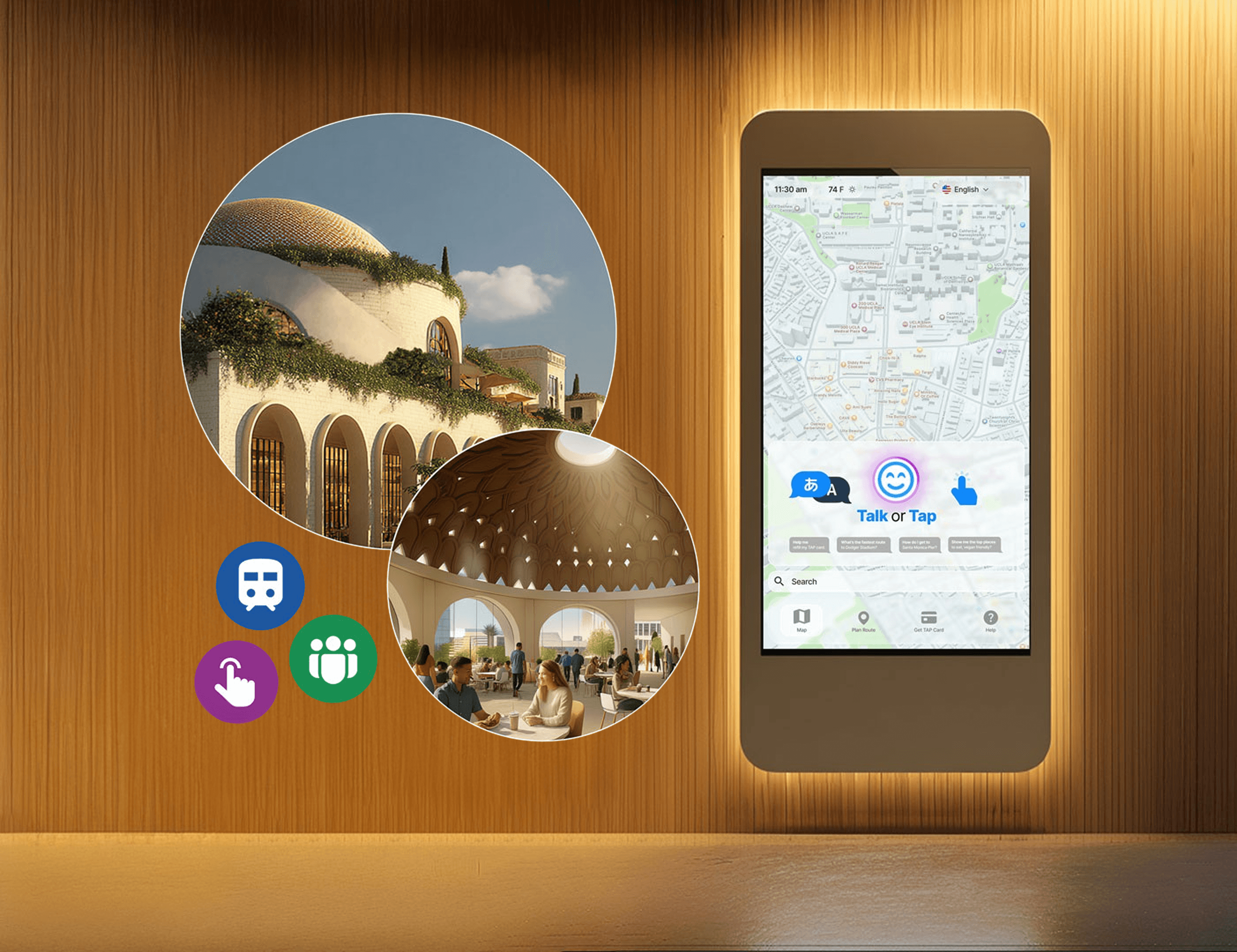
High end apartment buildings already compete through wellness and lifestyle amenities, which made OpenSeed a strong fit for the market.
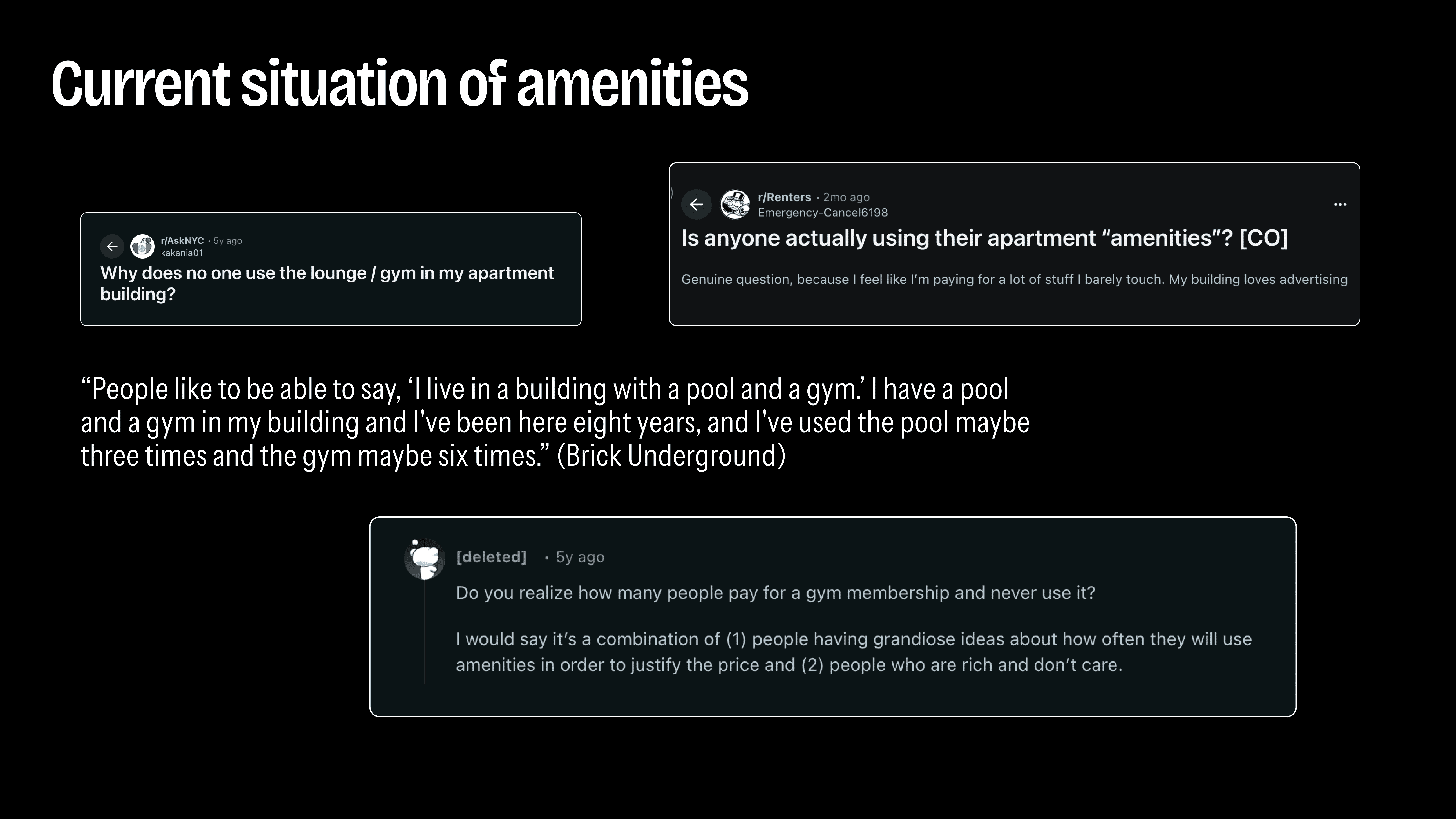
Netnography showed a common issue in apartment living: amenities are marketed as high value perks, but residents often use them far less than expected.
Research
We started by looking at why OpenSeed made sense for apartments in the first place.
High end apartment buildings, especially in LA, increasingly position themselves like boutique hotels. They offer fitness studios, yoga rooms, spa style treatment rooms, saunas, steam rooms, coworking spaces, pools, and social lounges. That showed us OpenSeed could fit into a real market trend. It was not random to place a wellness pod inside a building. It matched where multifamily amenities are already heading. But our research also showed the problem with that market. Amenities are often underused.
Through netnography, we found residents talking about gyms, pools, lounges, and other building amenities they technically had access to but rarely used. One quote we used in the presentation summed up the pattern: people like being able to say they live in a building with a pool and gym, but may only use them a few times over several years. That finding changed the direction of the project. We were not just designing a nicer way to use the pod. We were designing against the natural decay of amenity usage.
We focused the research around three questions:
What is happening in high end apartment amenities?
Luxury buildings are using wellness spaces to differentiate themselves, but the category is crowded. OpenSeed would need to feel more useful than a meditation room, more private than a shared lounge, and more memorable than a generic wellness perk.
Why do residents fail to use amenities they already have?
The issue is often not distance or access. It is low energy, lack of routine, weak reminders, uncertainty about value, and too much friction at the moment of use.
What keeps wellness behaviors going?
We looked at psychology around decision fatigue and continuation. After a long day, people tend to default to the lowest effort option. We also looked at perceived progress, because wellness behaviors are easier to continue when people can see that something is working.
The research made one thing clear: if the pod felt like a fresh start every time, it would be easy to drop. The experience needed to remember the resident, reduce decisions, and make progress visible. We also looked at meditation behavior more broadly. For apartments, the strongest use case was not a deep spiritual practice. It was a short reset: five to twelve minutes after work, between tasks, before sleep, or during a stressful day. That helped sharpen the product positioning. OpenSeed in apartments should feel less like “go meditate” and more like “take a quick reset without leaving the building.”
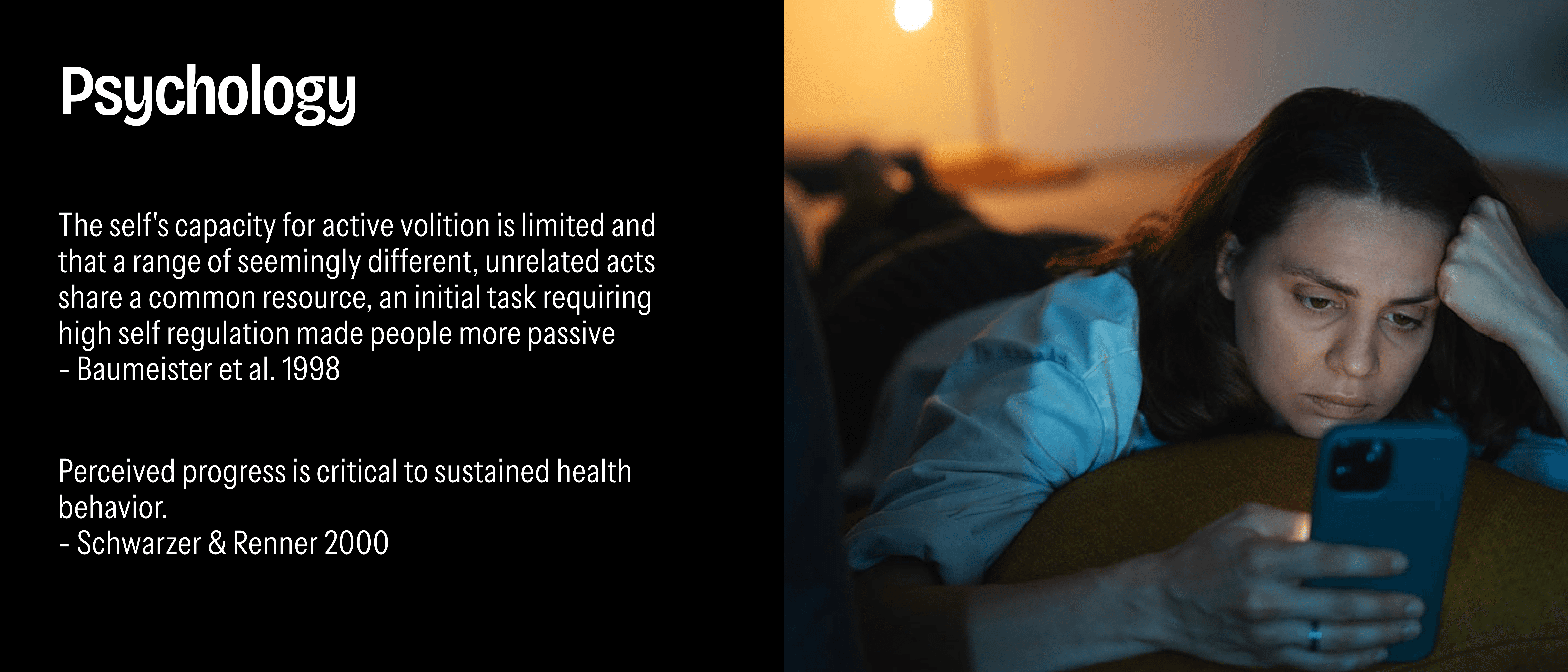
Behavior research helped frame the challenge: tired residents are less likely to make active decisions, and visible progress can make wellness habits easier to continue.

Competitive research helped position OpenSeed between meditation products, sensory wellness pods, and productivity focused spaces.
Process
After the research phase, we mapped the resident journey around the pod. The empathy map helped us define the resident mindset. They want wellness, privacy, and relief from stress, but they may also feel tired, skeptical, distracted, or awkward about using a shared pod. They are not necessarily resistant to wellness. They just do not want another thing that requires effort.
The current state journey map showed where the experience could break:
A resident learns the building has a pod, but does not know why they should use it.
They walk past it, but there is no strong prompt to enter.
They approach the pod, but do not know how to start.
They enter the interface, but have to decide between multiple session types.
They finish the session, but do not get a clear sense of what changed.
They leave and forget to return.
That map pointed to the main design gap: the pod had a session experience, but not enough continuity between sessions.
We also ran a heuristic evaluation of the existing OpenSeed tablet UI. A few issues stood out:
Session information was inconsistent
Some terms, like red light therapy, were not explained clearly.
Session length was not always obvious.
There was no strong beginner path.
The difference between guided options was unclear.
For a tired resident, those small issues matter. If someone is using the pod for a quick reset, the interface cannot ask them to decode the system first. From there, we explored a physical identifier. We wanted something that felt natural in an apartment context, where residents already use keys, fobs, and access cards. A QR keychain made sense because it could be given during move in, live on a resident’s keys, and connect the resident to the pod without requiring a manual login on a shared tablet.
Key Design Decision: Keychain over app
We intentionally avoided making a standalone app the first answer. OpenSeed is a small team, and a full app would create more development work while asking residents to download another product before they had built a habit. The keychain was lighter. It used an object residents already understand from apartment access systems and added personalization without making the experience feel heavy. We built a physical keychain mockup with a working QR code. Scanning it opened the Figma prototype, which let us test the flow as a real physical digital interaction.
I designed the digital prototype around the returning user experience:
Scan the keychain.
Load a personalized welcome screen.
Show recent progress and a recommended session.
Start or browse a meditation.
Complete the session.
See progress feedback.
View or send a session report.
Schedule the next session.
Add it to calendar.
The final prototype included a tablet flow for new and returning users, meditation category screens, session active states, completion screens, a mobile email/report flow, an OpenSeed account/report concept, and a scheduling/calendar flow.
We also created a service blueprint to show what had to happen behind the scenes. The resident only sees the keychain, scanner, tablet, report, and scheduling flow. But underneath that, the system needs profile lookup, session tracking, recap generation, notification logic, booking integration, and account access. That blueprint helped us treat the concept as a service, not just a set of screens.
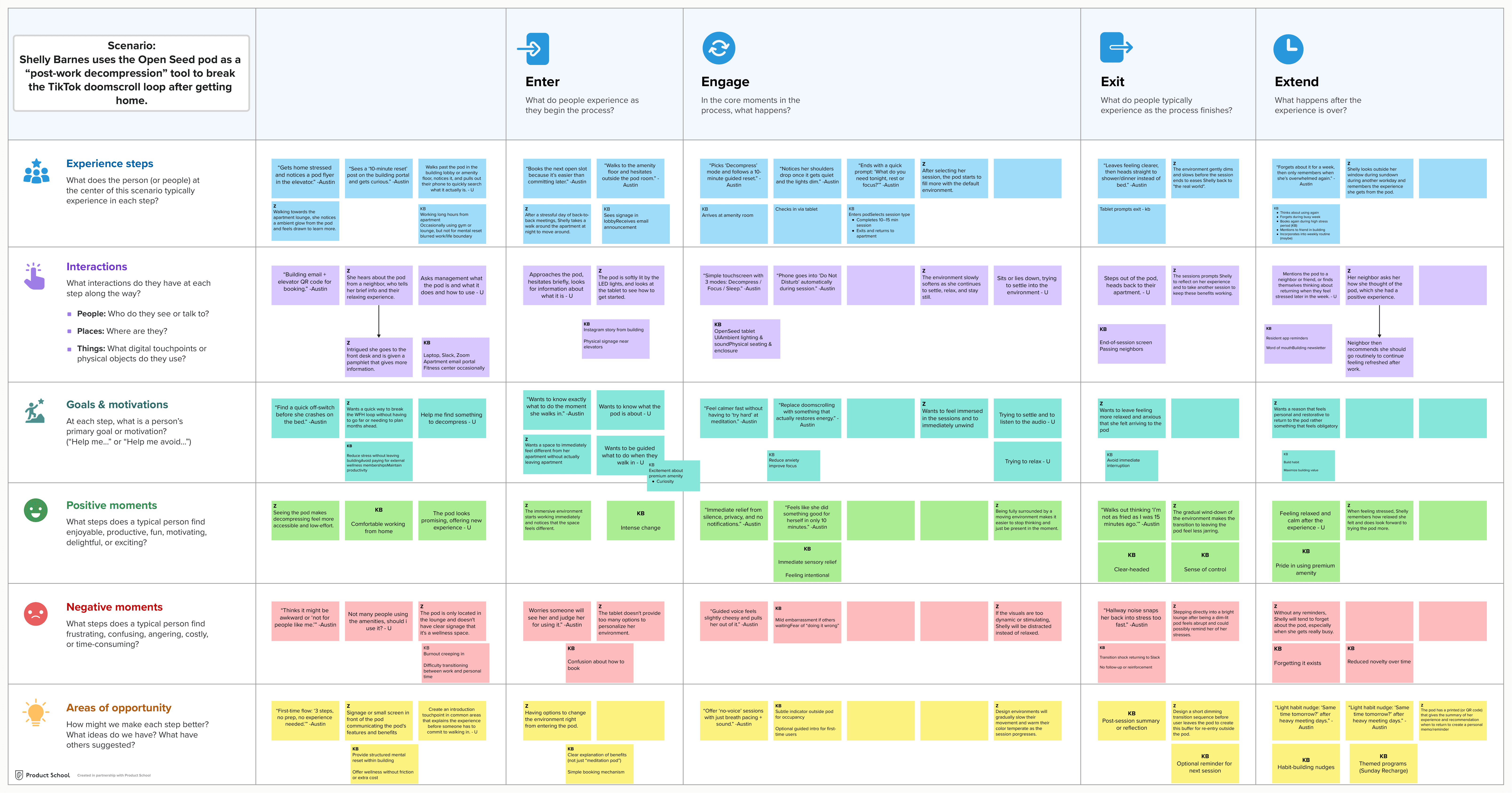
The journey map helped identify where the resident experience could break down before, during, and after using the pod.

The existing OpenSeed tablet UI had unclear hierarchy, vague category labels, limited guidance for beginners, and too much interpretation required before starting a quick session.

Physical QR keychain prototype used to test how a resident would access the pod through a familiar apartment style object.
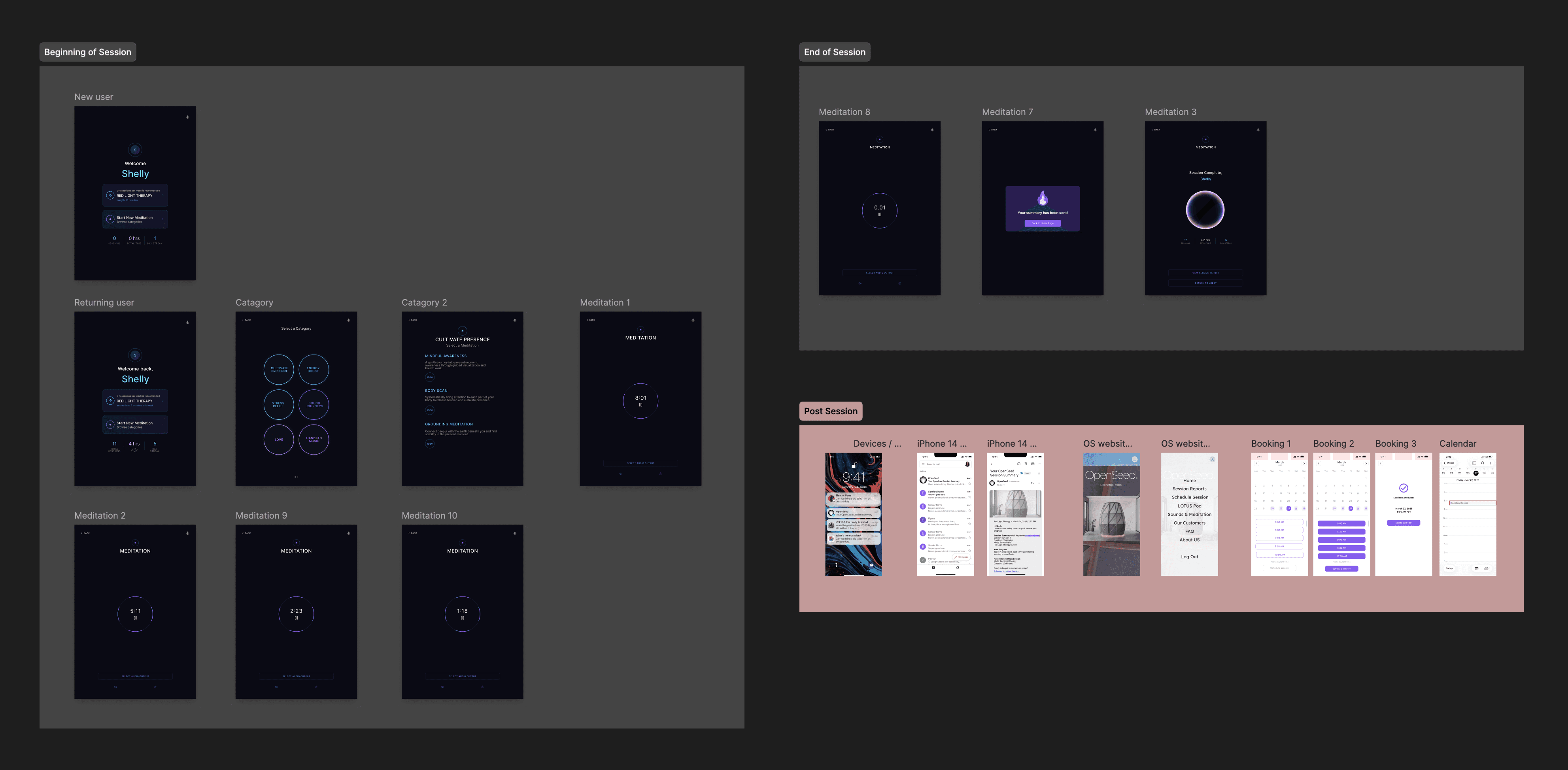
Our Figma prototype structure showing the full service loop across pod entry, session selection, session completion, post-session reporting, scheduling, and calendar confirmation.
Strategy
The strategy was to make OpenSeed easier to return to. In an apartment building, the pod is not competing only with other wellness products. It is competing with the resident’s couch, their phone, their tiredness, and the fact that doing nothing is always easier. So our concept focused on removing friction at the moments where the habit could break.
Start with less effort
The keychain makes entry quick. Instead of logging into a shared tablet or setting up an account in the pod, the resident scans and starts.
Make the pod remember the resident
A returning user should not feel like they are beginning from zero. The welcome screen shows their name, previous activity, and a recommended next step.
Make progress visible immediately
Meditation is hard to measure. We used session count, time spent, streak, visual progress, and session summaries to make the experience feel like it was building over time.
Make the next visit easy to commit to
The scheduling flow gives the resident a chance to act while the session is still fresh. If they wait until later, they may never do it.
There was also a stakeholder strategy behind this. OpenSeed is a small team, so the solution had to be realistic to implement. A full standalone mobile app would add a lot of complexity for the company and another download for residents. A QR keychain, email/report flow, and third-party scheduling integration created a lighter path that could still improve the pod experience dramatically.
Apartment buildings also need to justify amenities. OpenSeed needs to show that the pod is not just being installed, but actually used. Scan rate, session completion, repeat visits, report engagement, and scheduling behavior could all become evidence of value. That made the concept useful from both sides. Residents get a lower friction wellness routine. OpenSeed gets a clearer way to prove engagement in a building.

Storyboard showing how Blooming Progress supports the full resident loop: reminder, keychain access, personalized session, progress feedback, post session summary, and return behavior.
Validation
Validation testing round 1
We tested the concept in two rounds, round 1 included 4 participants. We tested the first end to end flow: physical keychain, tablet prototype, session completion screen, post session email/report flow, and scheduling loop. The first round showed that the core idea made sense, but the post session experience was not clear enough. Some participants did not understand what the email was telling them or why it mattered. The report felt too dense, the hierarchy was weak, and the relationship between session summary, full report, and scheduling was not obvious enough.
What we changed after Round 1
We improved the prototype around clarity and hierarchy. The completion screen became more focused on progress and reward. The report flow was adjusted to feel more like a quick result instead of a dense message. Scheduling became more visually connected to the post session experience. We also clarified the intended role of the keychain as a physical identity tool, since some users initially expected to scan it with their phone instead of at the pod.
Validation testing round 2
The second round included 5 participants. We tested the revised flow to see whether the keychain interaction, session report, and scheduling path were easier to understand.
The strongest signal across both rounds was that the overall loop made sense. Most participants understood the keychain interaction once the pod scanner or camera context was clear. Several immediately assumed the scan would pull up their name, session history, streaks, and recommendations, which was exactly the behavior we wanted the object to suggest. The physical keychain made the concept feel more real. Participants described it as cute, tangible, and fitting for a welcome package. But it also exposed a real service issue: the keychain was not fully self explanatory on its own. Some participants expected to scan it with their phone first. Others needed a clear sign or scan area near the pod. That gave us a concrete requirement. The keychain cannot carry the whole interaction by itself. The pod area needs a visible scan cue, and the welcome package needs simple instructions.
The tablet flow was mostly intuitive, but testing revealed several issues:
“Red light therapy” needed clearer explanation.
Some users wanted a quick start option instead of browsing categories.
“Return to Lobby” sounded like leaving the apartment lobby, not returning to the pod home screen.
The progress orb looked important, and users expected it to animate or be clickable.
Returning users wanted more acknowledgment of their history, like session count or “welcome back” context.
The email/report flow became the most important tension in the project. Users liked the idea of receiving a report, especially if they explicitly requested it, but they did not want the whole product experience to depend on email. Some said they would ignore it. Others said email felt like work, which clashed with the purpose of a wellness product. That helped clarify the right hierarchy: show quick value immediately, then use email as a lightweight follow up.
The report content also needed to be more believable. Users questioned vague numbers like stress scores if the system had not clearly asked for that input. They wanted benefits, trends, and plain language takeaways more than abstract metrics. Scheduling tested better across both rounds. Participants understood the value of booking the next session right away and adding it to calendar. The main concern was reminder control. People wanted help remembering, but they did not want constant texts or emails.
Main validation testing takeaway:
The keychain and personalized pod loop worked. The post session moment also had value, but it needed to be immediate, scannable, and optional instead of buried inside an email heavy flow.

Testing the keychain interaction and clickable prototype to see whether participants understood how to begin the pod experience.

Participants scanned the working QR keychain during usability testing, helping us validate the physical-digital entry flow before refining the prototype.
Solution
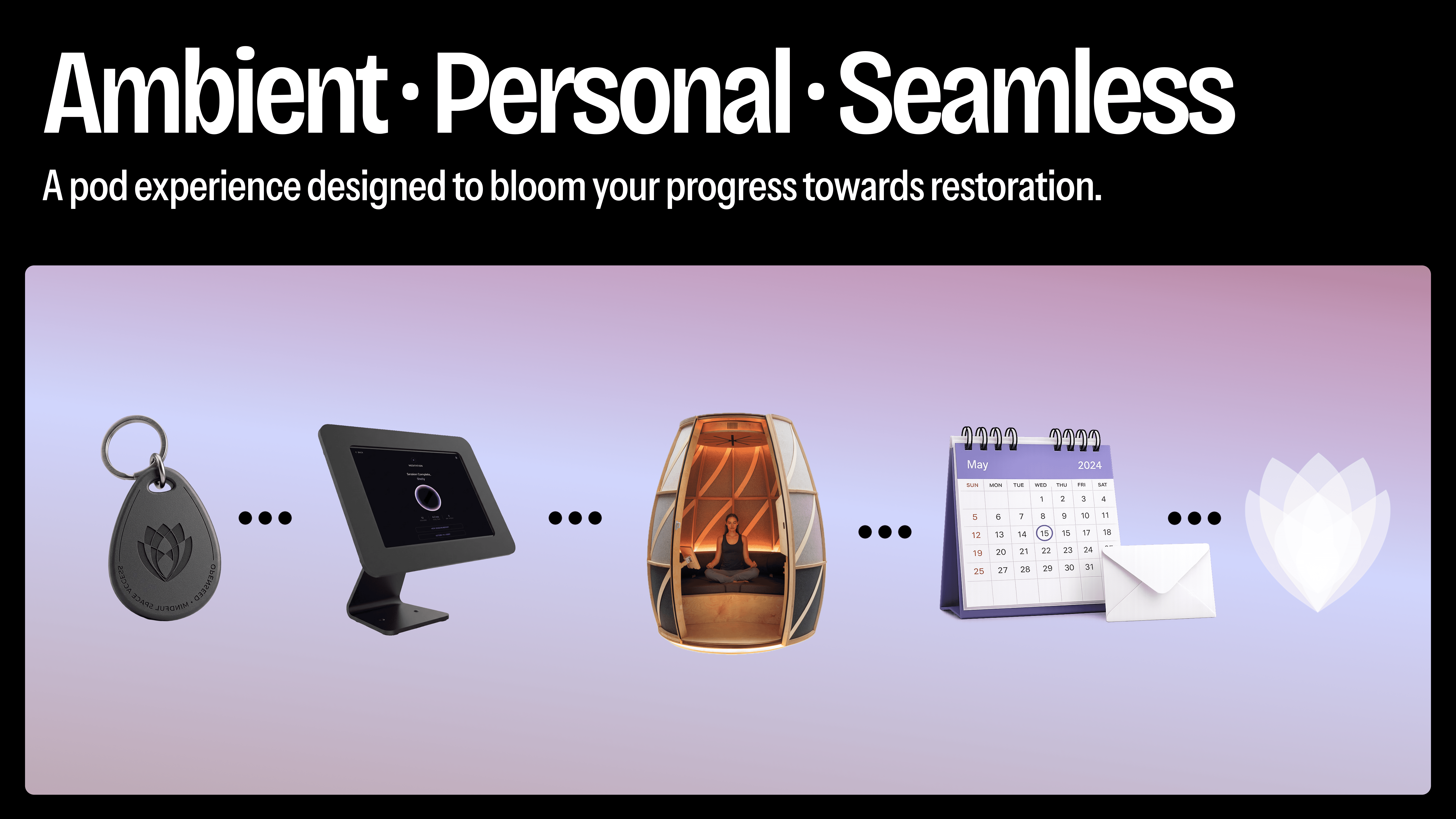
Blooming Progress is a service add-on that helps apartment residents build a repeat relationship with the OpenSeed pod. The resident receives a QR keychain in their apartment welcome package. When they enter the pod, they scan the keychain at the tablet or scanner. The pod recognizes them, welcomes them back, shows their progress, and suggests a next session. After the session, the resident sees a completion screen with a progress visual, session stats, and a short reinforcement message. From there, they can view a quick summary, send a report to email if they want, or schedule the next visit.
The full experience follows a simple loop:
Scan the keychain.
Start a personalized session.
Complete the session.
See progress.
Schedule the next session.
Return later.
The value of the concept is not that it adds more features to the pod. It gives the pod memory. Each session becomes part of a larger resident journey instead of an isolated wellness moment. The final presentation framed the concept around three parts:
Physical identifier
The keychain identifies the resident without a manual login.
System recognition
The pod recognizes the resident and picks up from previous sessions.
Return loop
Progress feedback, reports, scheduling, and reminders help bring the resident back.

The tablet flow picks up from the resident’s last session, shows recent activity, and uses progress feedback to make the experience feel continuous.

The post session flow gives residents a quick summary, connects them to their OpenSeed account, and creates a path toward scheduling the next session.

The scheduling flow lets residents book their next pod session and add it directly to their phone calendar, making the return visit easier to remember.
Key Features
QR Keychain
The QR keychain is the resident’s entry point into the OpenSeed experience. It is given during move in and connects the resident to their pod profile. This solved a practical issue with shared wellness spaces. Residents should not have to log into a tablet inside the pod. The keychain makes the interaction faster and more familiar. Testing showed the keychain was memorable, but it needed support. The next version would include clearer welcome package instructions and a visible “scan keychain here” cue on or near the pod.
Personalized Welcome
After scanning, the tablet greets the resident by name and shows recent activity. This makes the experience feel like it is continuing instead of restarting. The screen includes a recommended session, a start new meditation option, and quick stats like total sessions, time spent, and streak. The goal is to give just enough context without slowing the user down.
Recommended Session
The recommended session reduces choice overload. A tired resident should not have to browse every possible meditation category before starting. Testing showed that recommendations need a reason. Users were more likely to trust the suggestion when they understood why it appeared.
A stronger version would include short context like: “Recommended because you completed two stress relief sessions this week.” or “Good follow up after your last red light therapy session.”
Session Completion
The completion screen gives the user feedback right when the session ends. It shows completion, progress, total sessions, total time, and streak. The progress orb became one of the more memorable visual elements. Users noticed it and some expected it to move, fill, or be clickable. That suggested a future direction where the orb could evolve over time as the resident continues using the pod.
Session Summary
The session summary explains what happened and what to do next. In the prototype, this lived mostly in email and a web report. Testing showed that this was not the right hierarchy. Users wanted a quick summary immediately after the session, either on the pod tablet or in their account. Email still had value, but only as a follow up or saved record.
The better flow is:
View quick summary.
Schedule next session.
Send report to email.
Open full report if desired.
Report Page
The report page gives residents a deeper view of session history, trends, and progress over time. The first version proved that users were interested in progress, but the content needed to be more believable and easier to scan. Participants wanted fewer dense paragraphs, stronger visuals, and clearer explanation behind any scores.
A better report should answer:
What did I just do?
What benefit did it support?
What changed from last time?
What should I do next?
Why is that being recommended?
Scheduling and Calendar
The scheduling flow helps turn a good session into a repeat visit. Residents can choose a time for the next session and add it to their calendar. This tested well because participants admitted they probably would not remember to schedule later. The calendar step made the return visit more concrete. The next version should include reminder preferences so residents can choose calendar only, email, app notification, or no reminder.
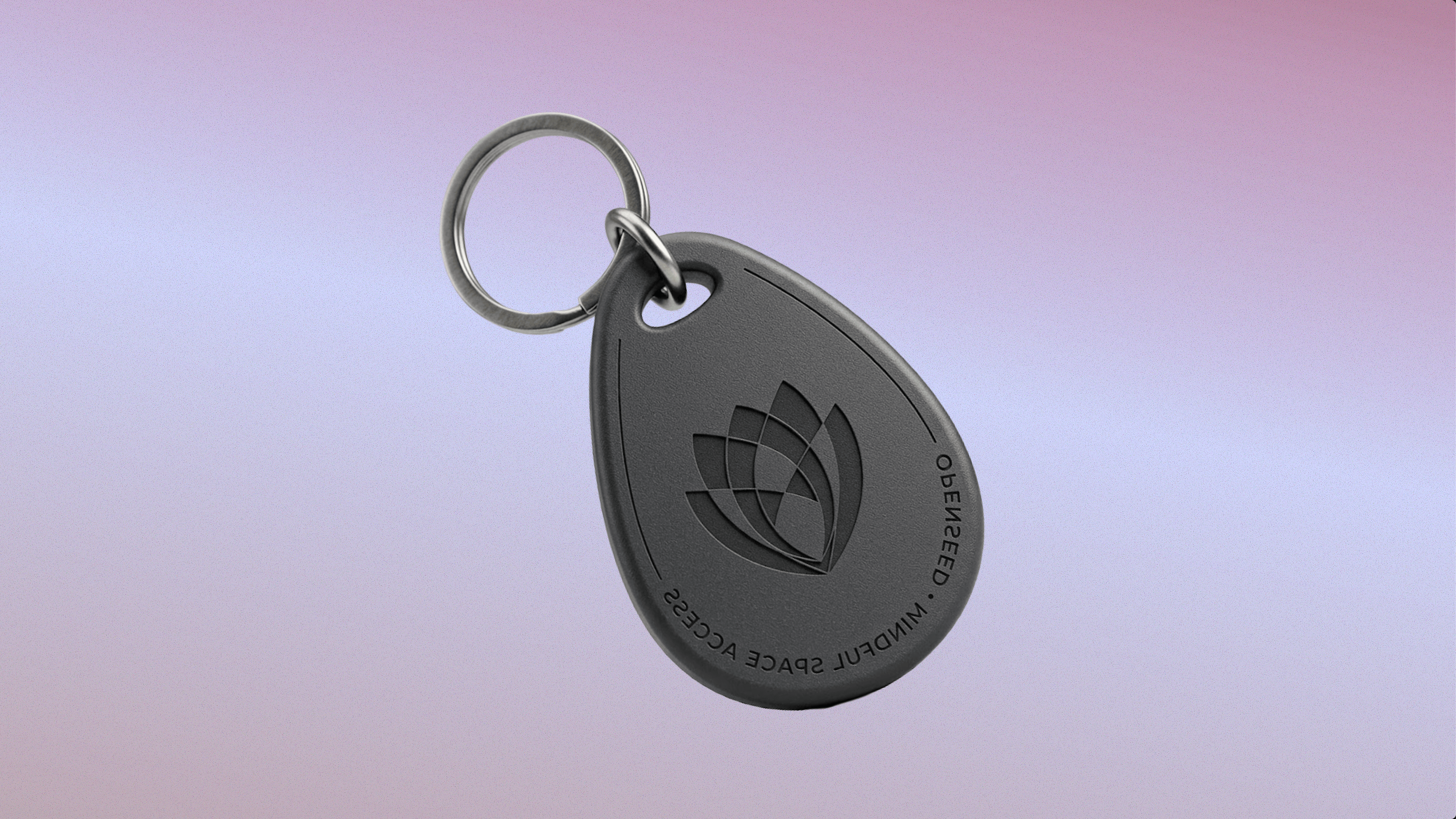
The QR keychain acts as the resident’s physical identifier, connecting the pod to their profile without requiring a manual login.

The tablet flow moves from personalized recognition to session selection, meditation, and completion, showing how the pod experience works from start to finish.
Results
The final outcome was an end to end prototype connecting the physical keychain, pod tablet, session flow, progress feedback, report experience, and scheduling loop.
Final deliverables included:
Working QR keychain prototype
Figma tablet prototype
Mobile email/report flow
OpenSeed account/report page concept
Scheduling and calendar flow
Service blueprint
Research synthesis
Stakeholder presentation
The concept validated the main direction: a physical and digital service layer could make OpenSeed feel more personal and easier to return to inside an apartment complex.
What worked:
Most participants understood the keychain once the scan context was clear.
The personalized welcome screen made the pod feel more useful for returning users.
The tablet flow was mostly easy to follow.
Progress feedback made the session feel more rewarding.
Scheduling and calendar reminders gave users a practical reason to come back.
The working QR keychain made the concept feel real and testable.
Stakeholders saw the concept as something OpenSeed could realistically implement.
What needed improvement:
The keychain needed better signage and onboarding.
“Red light therapy” needed clearer explanation.
“Return to Lobby” needed to be renamed.
The first version of the email/report flow was too unclear.
The report needed stronger hierarchy and more believable metrics.
Recommendations needed to explain why they were suggested.
Reminder settings needed to be optional and user controlled.
These findings helped us define the next version. The biggest shift would be moving the value of the report closer to the session. Instead of asking users to open email later, the pod should show a quick summary immediately, then offer deeper report access as a secondary action. For stakeholders, we recommended piloting the concept in one residential building before scaling. Success should be measured by scan rate, session completion rate, repeat visits, scheduling rate, and report engagement.
Stakeholder Feedback
We presented the concept to OpenSeed throughout the project, with most of the later feedback coming from Vids Samantha, OpenSeed’s CTO.
His feedback was encouraging because the concept matched OpenSeed’s real constraints. OpenSeed is a small team, so a heavy solution like a full mobile app would be harder to execute. Our approach gave them a practical middle ground: add a keychain based identity system, use a lightweight report flow, and connect scheduling without rebuilding the entire product ecosystem. Vids consistently responded positively to the idea and saw it as something OpenSeed could realistically implement into the pod experience. He also liked that the report could be sent through email instead of requiring a full app, because that kept the system lighter for both OpenSeed and the user.
That feedback mattered because it confirmed the concept was not only desirable from a user perspective. It also made sense for the business and the team that would have to build it.
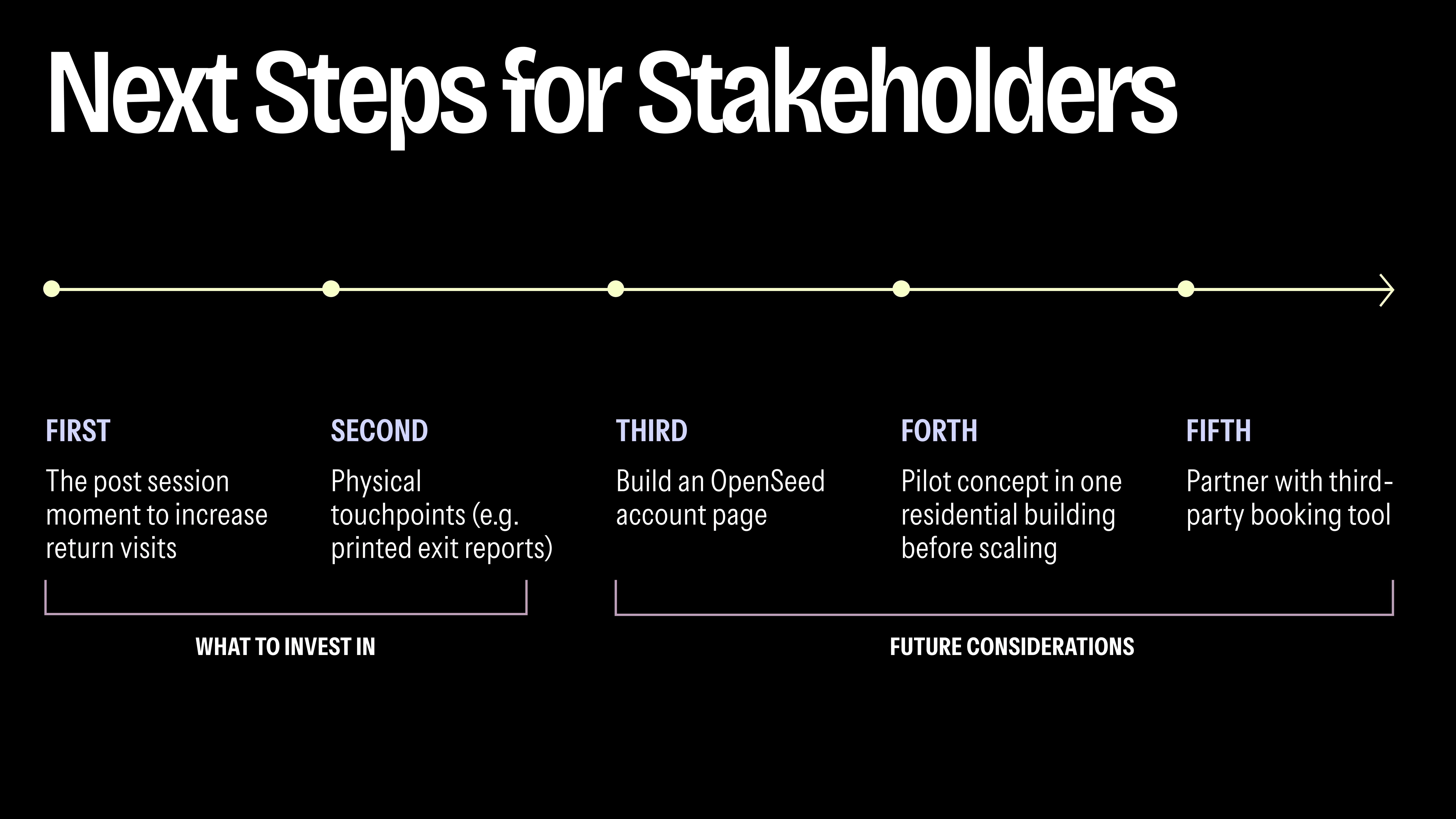
Next steps for OpenSeed to make Blooming Progress a reality in their pods.
Impact
By the end, Blooming Progress gave OpenSeed a more realistic apartment strategy: not just placing a pod in a building, but giving residents a reason to keep using it.
For residents, the concept lowers the effort to begin and makes each visit feel connected to the last one. They scan, get recognized, complete a session, see progress, and have a simple way to return.
For apartment buildings, the concept makes the amenity more valuable. Instead of being a static wellness object, the pod becomes a service that can show engagement over time.
For OpenSeed, the concept creates a scalable layer around the pod. The keychain, profile, session history, reports, and scheduling flow could support retention, building level analytics, and stronger property partnerships.
The main impact was a shift in how the pod was framed. The pod creates the moment of calm. Blooming Progress helps that moment become a habit.
What I Learned
This project pushed me to think beyond the interface. We were not only designing a tablet flow. We were designing a physical keychain, a scan behavior, a shared device experience, a report system, a scheduling loop, and the resident’s relationship to an apartment amenity.
The biggest lesson was that behavior change depends on the small moments around the main product. A good meditation session matters, but so does the reminder that gets someone off the couch, the sign that tells them where to scan, the completion screen that shows progress, and the schedule button that turns intention into a future action.
Testing also showed me how important it is to prototype physical assumptions. The keychain seemed obvious in the concept, but participants still interpreted it differently. Some wanted to scan it with their phone. Some needed a stronger cue from the pod. We only caught that because we made the interaction tangible.
I also learned that progress data has to feel earned. Users liked seeing reports and stats, but they questioned numbers that did not explain where they came from. If a wellness product shows a stress score, calm score, or improvement claim, the system needs to make that measurement believable.
This project made me think more like a service designer. The interface was only one layer. The real work was connecting the product, environment, user behavior, and business need into one coherent experience.
Reflection
Blooming Progress was a strong team project because it started with a real company prompt and ended with a tested physical digital concept.
My biggest contribution was designing the digital prototype and making the service idea testable across the pod tablet, mobile report, and scheduling flow. I also helped shape the apartment market direction through secondary research, worked on the UX flows, and conducted usability testing that revealed where the concept worked and where it broke.
What I am most proud of is that we did not just propose “an app for the pod.” We designed around the product OpenSeed already had and created a practical add on that could make it more useful in a specific market.
The strongest part of the concept was the full loop: keychain, scan, personalized session, progress feedback, report, scheduling, return. That loop gave OpenSeed a way to think about retention instead of only installation.
The project also became stronger because testing exposed real flaws. Email could work as a lightweight channel, but not as the only place where value appeared. Some language was unclear. The report needed better hierarchy. The keychain needed environmental support. Those findings made the concept more grounded, because they showed what would need to change before a real pilot.
If I continued the project, I would focus on three things:
A stronger in-pod session summary before email.
Clearer progress visuals and recommendation logic.
A live pilot in one apartment building to measure actual repeat usage.
The main takeaway is that OpenSeed’s apartment opportunity is not just about offering calm. It is about making calm easy to start, easy to understand, and easy to return to.