Overview
LOGOS is a physical and digital product concept designed for young men who may need support, but would likely reject anything that feels too clinical, sentimental, or obviously therapeutic. The project explores how self awareness could be introduced through a system that feels more like training, tracking, and self command than a traditional mental health app.
The concept combines a tactile handheld logger with an AI guided companion app. The logger makes it quick to capture mood, energy, and small tasks in the moment. The app turns those inputs into patterns, reflections, plans, challenges, and guided next steps. Together, the system creates a low friction loop between noticing how you feel, understanding what is shaping it, and doing something practical about it.
LOGOS is not positioned as therapy or a replacement for therapy. It is an early self awareness and behavior support tool for users who might never open a conventional wellness app in the first place. That distinction shaped the whole project. The main design challenge was not only building the features, but making the product feel credible enough for this audience to actually choose.
My main contribution was shaping the product strategy behind the concept. I helped define the audience framing, value proposition, product logic, go to market direction, business model, and the relationship between the physical logger and the digital coaching experience.
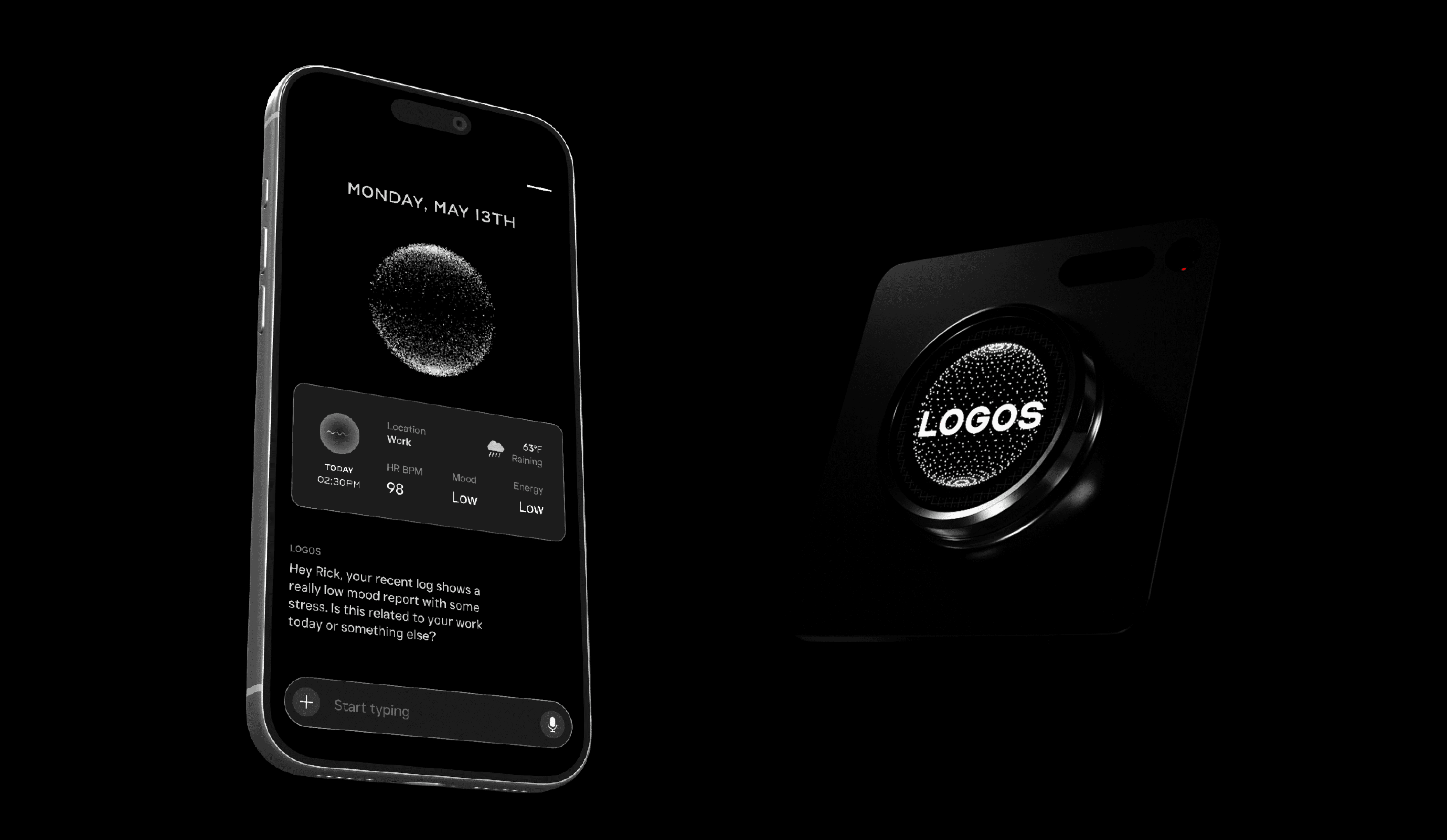
App entry flow establishing LOGOS’s visual identity and setting the tone for the app experience.
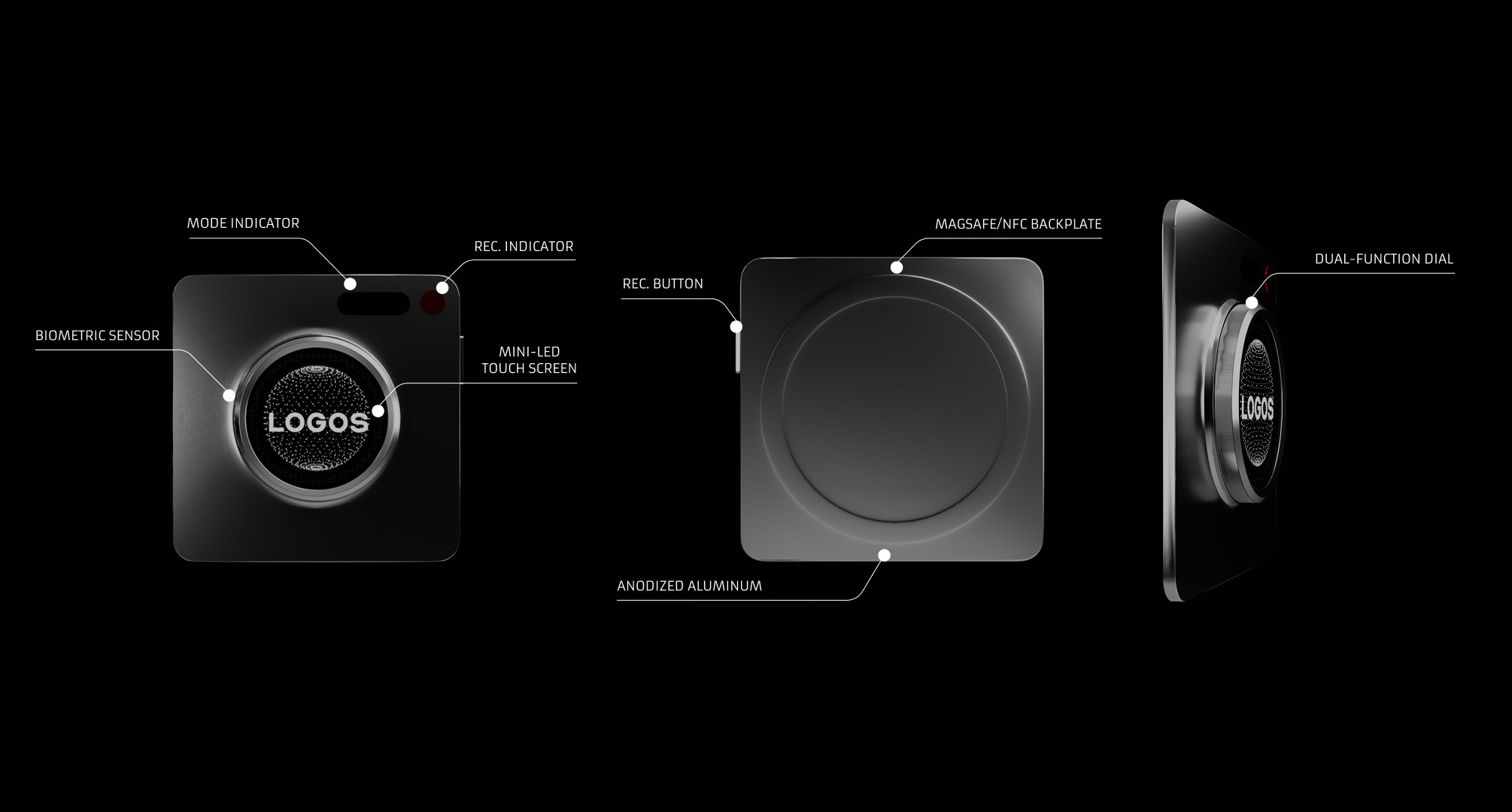
Refined hardware concept illustrating the final logger form, key components, and physical interaction model.
Context
This project started from a larger cultural problem. Many Gen Z men are growing up in online environments where isolation, emotional suppression, and identity confusion are common. At the same time, harmful online communities often succeed because they offer something traditional support systems do not always provide: structure, certainty, belonging, status, and language that feels familiar.
That does not mean these users do not need support. A lot of the time, the problem is the way support is packaged. Many existing mental health and wellness tools can feel too soft, clinical, generic, corny, or disconnected from how young men see themselves. For users who already feel defensive around vulnerability, that tone can create immediate resistance.
This created the central tension for the project. Helpful tools can fail when they feel culturally wrong, while harmful spaces can become persuasive because they offer identity, discipline, and a sense of control. LOGOS was our attempt to design into that gap without pretending it was simple.
The design question became: what would emotional self awareness look like if it was framed through performance, readiness, and tactical reflection instead of therapy language? And could a physical product make that process feel more intentional, less embarrassing, and easier to repeat?
That reframing shaped the entire direction. LOGOS had to feel useful, restrained, and credible. It could not talk down to the user. It could not feel like a generic mood tracker. It needed to meet the audience where they already were, then gradually help them build more awareness and better habits.
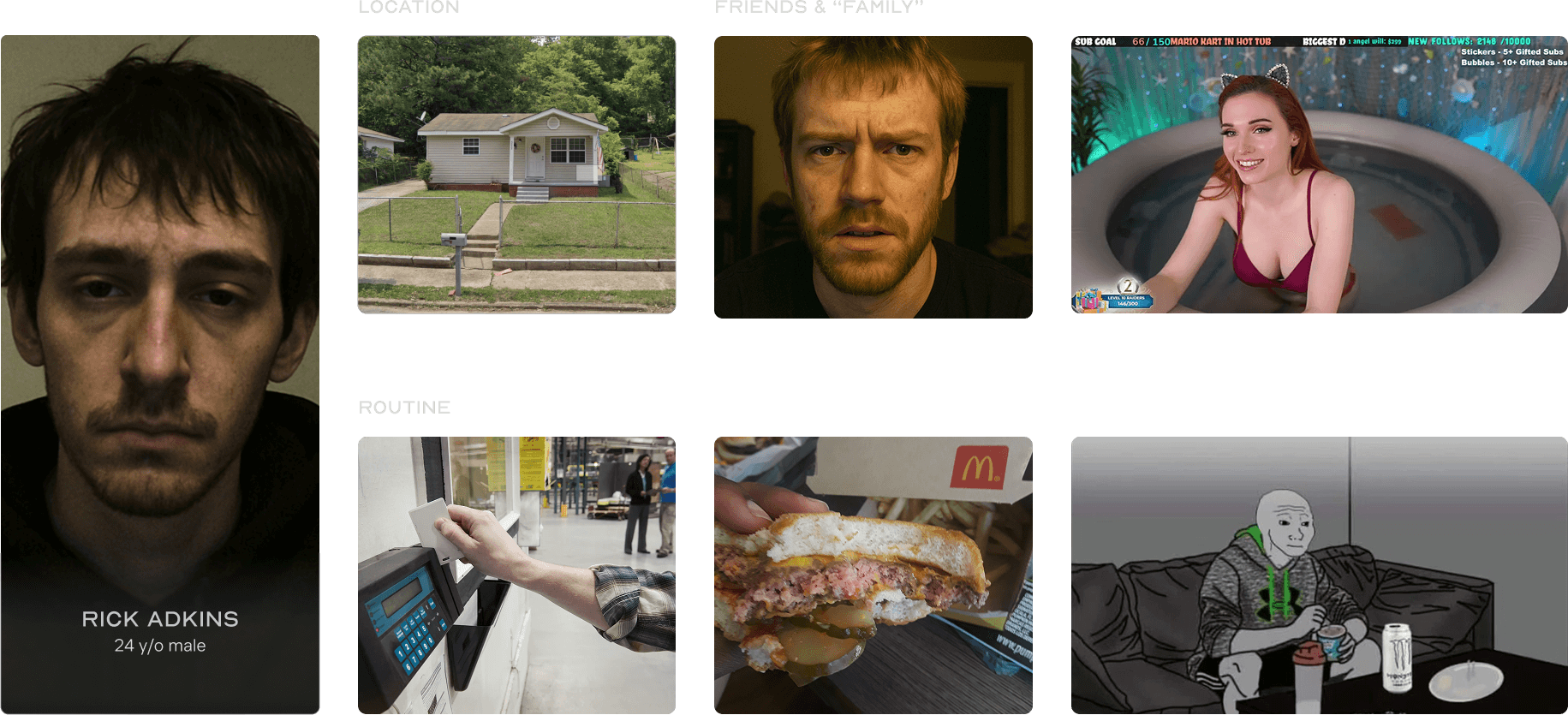
Core persona capturing the lifestyle, emotional state, and digital environment shaping the problem space.
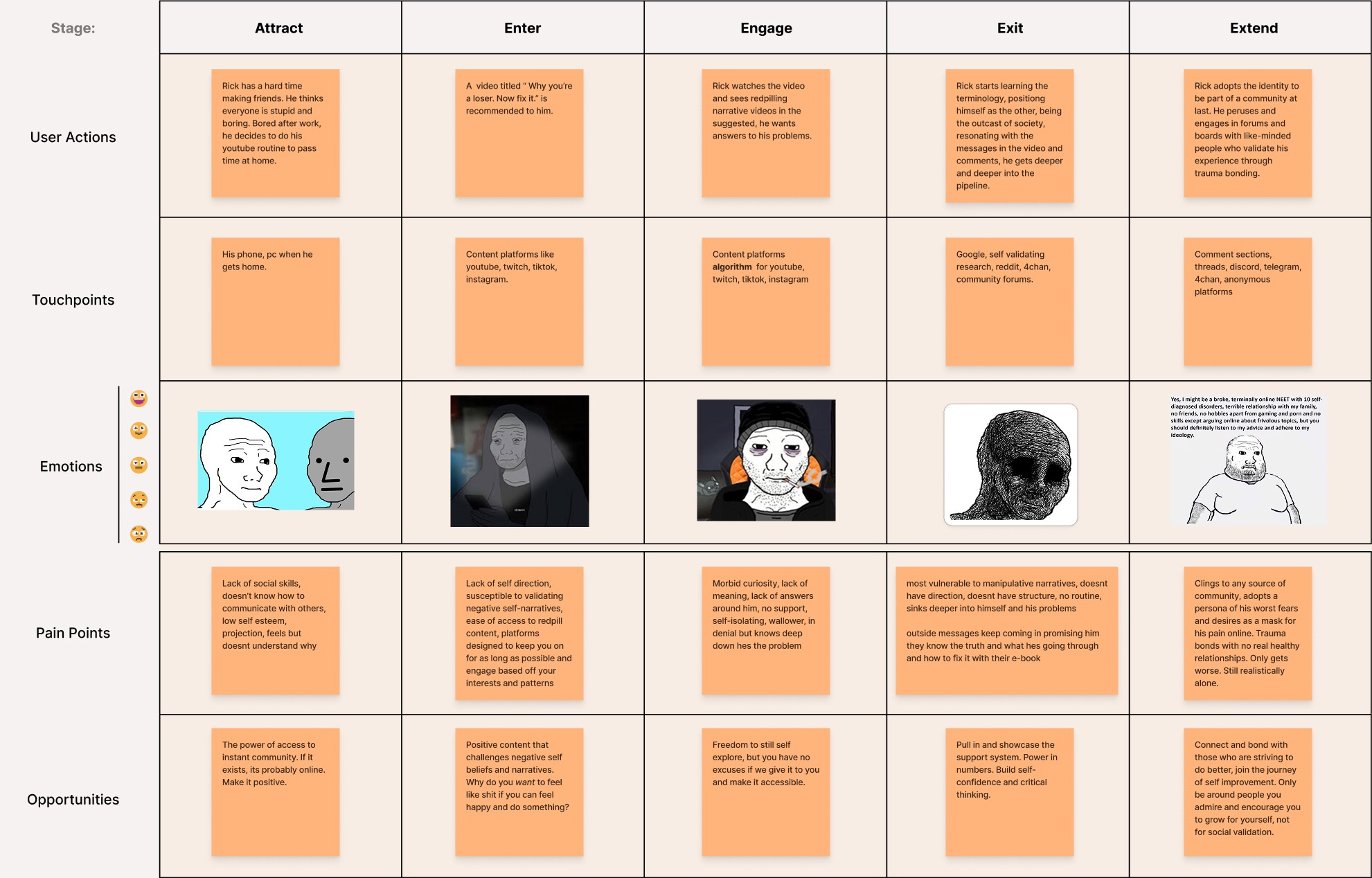
Behavioral journey map showing how vulnerable users move from routine frustration into deeper manosphere engagement.
Research
Our research focused on two main questions. First, why do many existing mental health and wellness tools fail to resonate with this audience? Second, what makes harmful online spaces feel more compelling, even when they may be damaging?
We looked at cultural behavior, product positioning, emotional resistance, self improvement spaces, manosphere adjacent communities, and language patterns around discipline, control, confidence, and status. We also studied existing products across biofeedback, mood tracking, journaling, coaching, and mental wellness to understand what already existed and where the gap might be.
A major takeaway was that many young men in this audience are not opposed to growth. They are opposed to being approached in a way that makes them feel weak, exposed, judged, or misunderstood. That changed how we thought about the product. The entry point could not be “talk about your feelings.” It had to feel more like “understand your state, control your response, and improve your patterns.”
We also found that physical interaction mattered. A physical logger introduces ritual, immediacy, and intention in a way that an app only journaling flow often does not. Pressing, turning, or logging something through a dedicated object makes the action feel more deliberate. That made the hardware feel central to the behavior strategy, not just a gimmick.
The competitive analysis also showed a clear whitespace. Many wellness tools lean into calm visuals, emotional language, journaling prompts, and soft encouragement. Fitness, productivity, and biohacking tools, on the other hand, often use sharper language around performance, data, and improvement. LOGOS sits between those worlds. It uses the emotional goal of wellness, but the product language of training and self optimization.
Key Findings:
Traditional wellness tools often feel too clinical, vague, generic, or emotionally over signaled for this audience.
Young men who reject therapy language may still respond to systems framed around performance, readiness, control, and momentum.
Structure, identity, ritual, and a sense of agency matter as much as the feature set itself.
Tactile interaction can make self tracking feel more intentional, less abstract, and easier to repeat.
The product is not only competing against other apps. It is competing against online spaces that already offer belonging, certainty, and a strong identity frame.
Cultural resonance is critical. If the product sounds like it was made by people who do not understand the audience, it will likely be rejected before the user reaches the value.

Product precedents reviewed to understand existing approaches to biofeedback, emotional tracking, and mental wellness support.
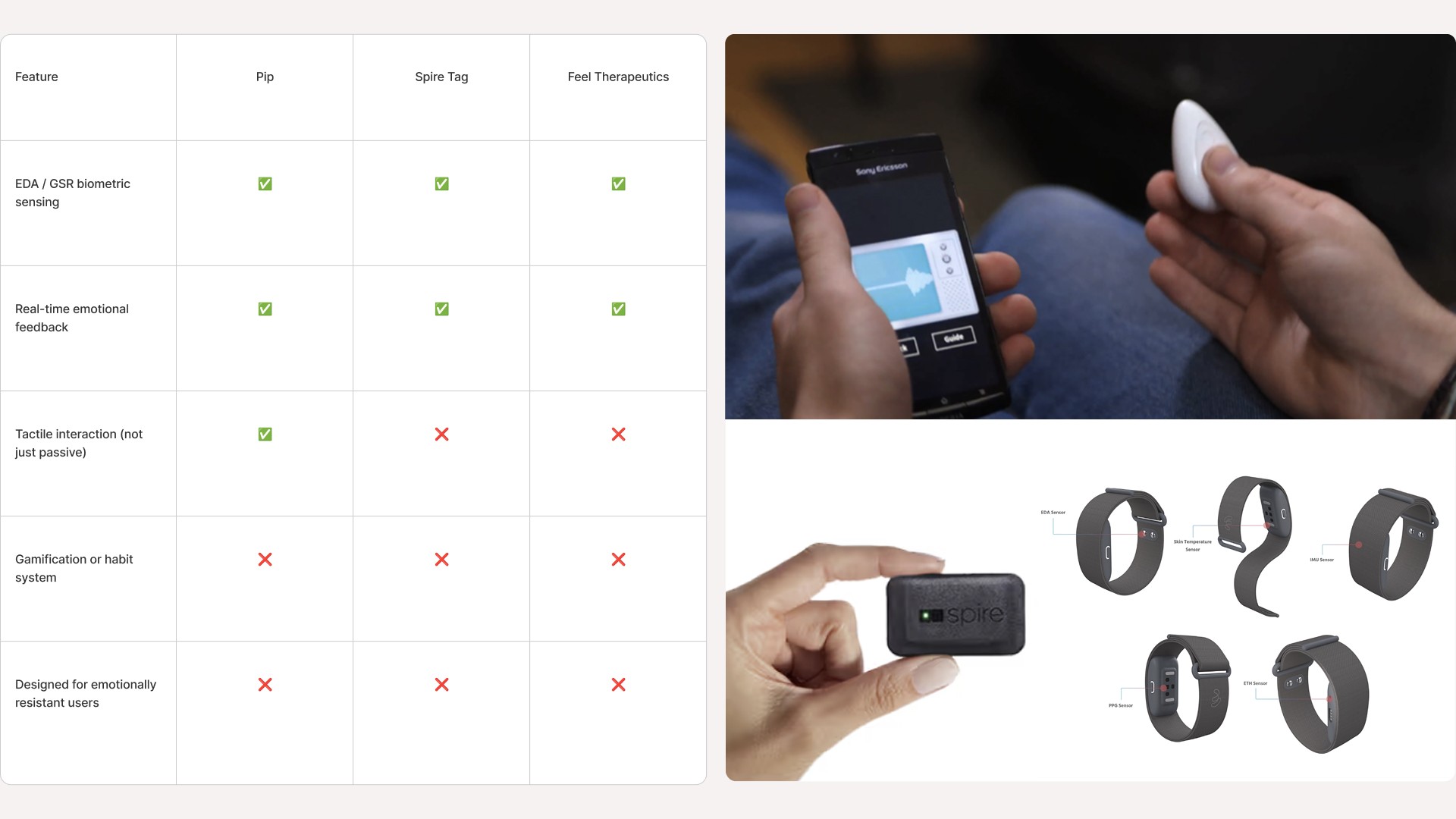
Comparison of adjacent products highlighting the whitespace LOGOS was designed to occupy.
Process
The project moved through problem framing, secondary research, competitive analysis, persona development, journey mapping, concept ideation, prototyping, user testing, and business modeling.
Early in the process, a lot of the work centered on finding the right entry point. We knew that if LOGOS looked or sounded like a standard mental health product, the audience would likely reject it. That forced us to think carefully about tone, physical form, interface behavior, product language, and what the first moment of use should feel like.
As the concept developed, the system split into two connected parts: the physical logger and the digital coaching app. The logger handled fast, low friction input in the moment. The app handled reflection, pattern recognition, AI guidance, planning, and accountability. The goal was to make the app and hardware feel like one connected behavior loop instead of two separate products.
My contribution centered on shaping the broader product logic around both parts of the system. I helped define why the product should exist, who it was for, how it should be positioned, how the logger and app should work together, and how the concept could become viable beyond a classroom prototype.
Testing and iteration helped sharpen the idea. Early versions were more broadly about emotional support, but the concept became stronger when we focused on ritual, control, tactical reflection, and guided change. That direction gave LOGOS a clearer reason to exist and made the system feel more specific to the audience.
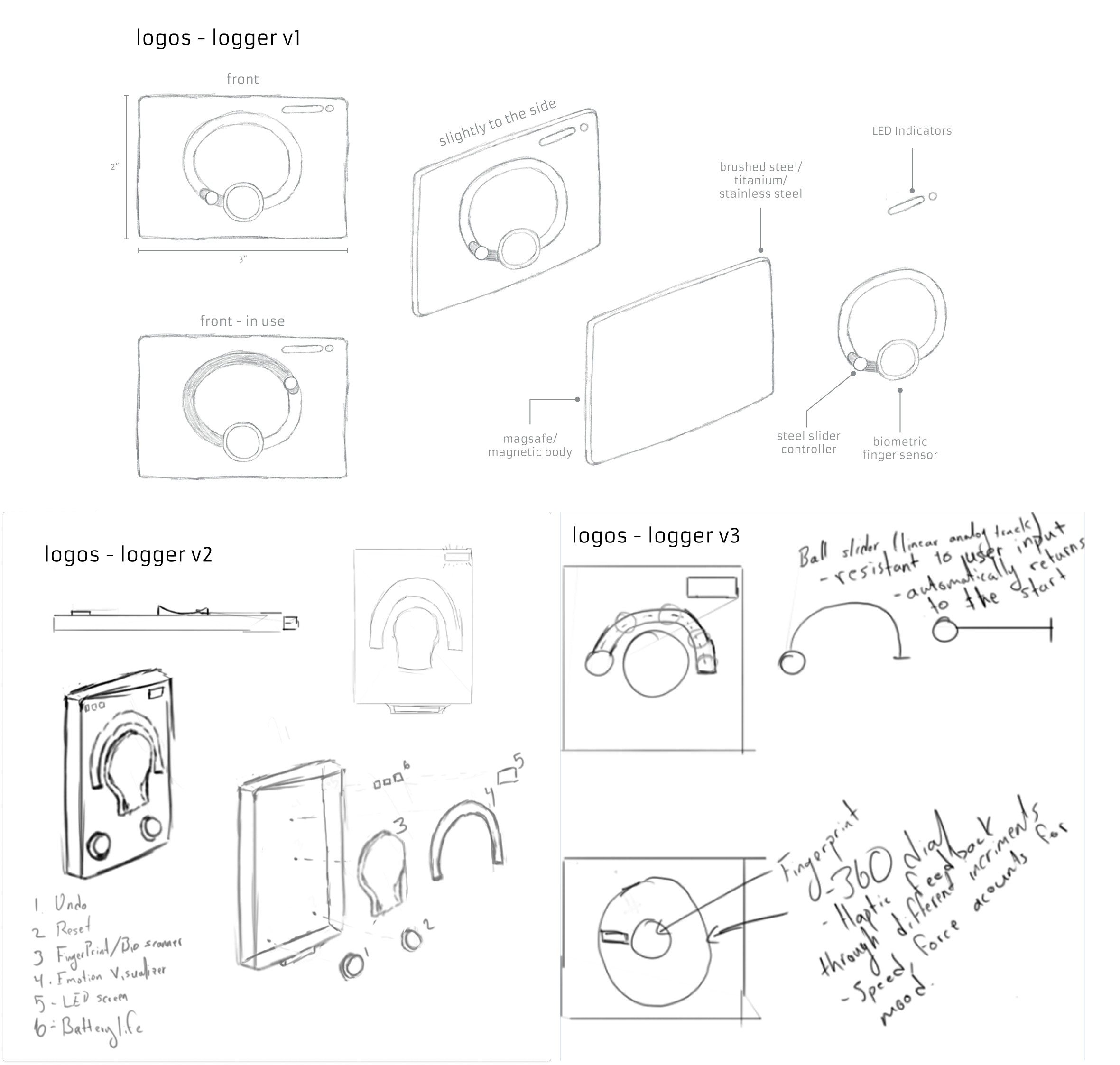
Initial concept sketches exploring how the logger could feel discreet, tactile, and technically believable.
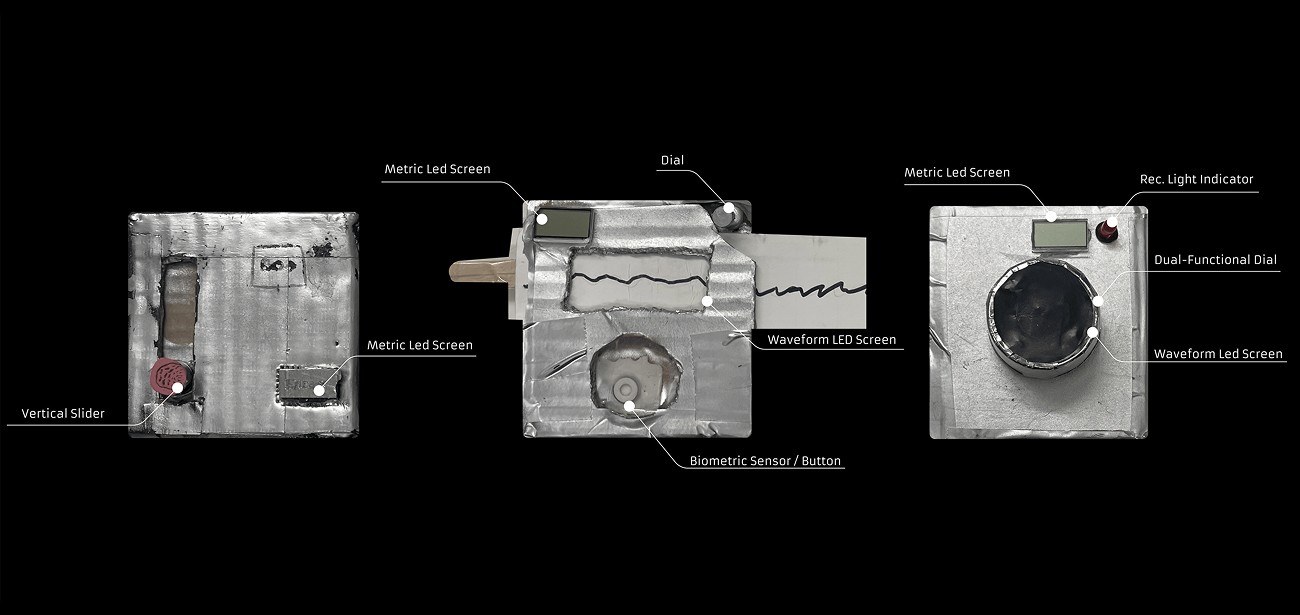
Physical prototype variations built to test interaction clarity, hand feel, and preferred hardware direction.
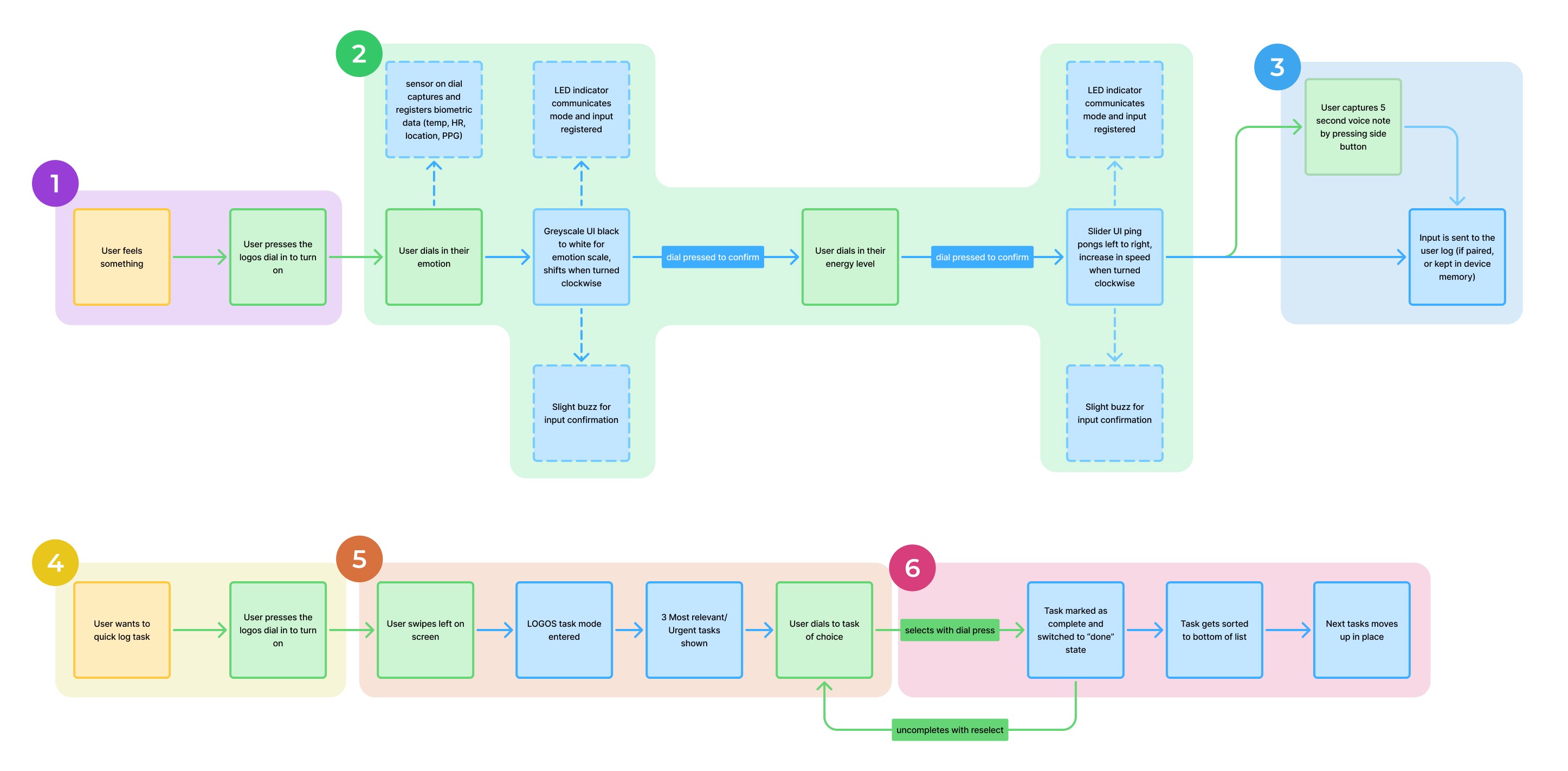
Detailed flow showing how physical input, biometric capture, and quick task logging work together in the logger experience.
Strategy
The core strategy behind LOGOS was to design a support system that does not immediately feel like support. For this audience, first impression matters. If the product feels too therapeutic, too soft, or too much like a wellness cliché, many users will disengage before it has a chance to help.
Instead of leading with mental health language, LOGOS uses a more acceptable frame: performance tracking, self optimization, readiness, and tactical self awareness. This shaped the industrial design, app language, interaction model, go to market strategy, and business model.
The physical logger became central because it made checking in feel more like using a tool than confessing into an app. The product had to feel controlled, intentional, and useful while still helping users notice emotional patterns and take action.
Design Principles:
Reduce friction around self awareness
Make reflection feel tactical, not overly vulnerable
Build trust through clarity, restraint, and user control
Use ritual and physical interaction to create consistency
Avoid generic wellness cues that could create resistance
Make emotional patterns visible without judgment
Create small next steps instead of overwhelming advice
These principles shaped the system architecture. The logger captures quick inputs, the app turns those inputs into meaning, and the AI layer helps identify patterns and suggest realistic next steps.
Go to Market Thinking
A major part of my contribution was pushing LOGOS beyond concept appeal and into product viability. Rather than positioning it for all men or general wellness users, we focused on a clear beachhead audience: young men ages 16 to 25 who are skeptical of therapy but already familiar with performance driven spaces like fitness, productivity, biohacking, gaming, and self improvement.
That audience shaped the launch strategy. LOGOS would lead with readiness, consistency, self regulation, pattern recognition, and performance instead of emotional healing or mental health treatment.
The rollout was mapped in three phases:
Phase 1: Closed Beta
Launch in higher trust environments such as school programs, nonprofits, mentorship groups, gyms, and esports spaces. This would help test the core experience, refine the feature set, validate the framing, and answer key behavior questions around retention, trust, and whether users build a real habit of self awareness.
Phase 2: Wider Public Launch
Expand through channels that already match the audience’s behavior, including Reddit, Discord, Product Hunt, and creator partnerships in productivity, fitness, and self improvement. Messaging would avoid therapy language and focus on mood consistency, readiness, discipline, self-regulation, and understanding your patterns.
Phase 3: Ecosystem Growth
Expand through app only access, institutional partnerships, group accountability features, integrations with existing health platforms, and more adaptive AI guidance. The long term goal is to grow from a hardware and app concept into a broader platform for emotional performance and self regulation.
Business and Financial Strategy
I also worked through how LOGOS could function as a real business, including revenue structure, pricing logic, manufacturing feasibility, adoption, retention, and long term growth. The model uses three connected revenue paths:
Hardware Sales
The physical logger creates differentiation, ritual, and a stronger sense of product ownership than an app only wellness tool.
Subscription Revenue
The app subscription supports deeper AI analysis, coaching, advanced pattern recognition, personalized plans, accountability features, and long term reflection.
Institutional Partnerships
Schools, nonprofits, mentorship programs, youth organizations, gyms, and wellness partners create a second adoption path for users who may benefit from the product but may not discover or pay for it on their own.
This hybrid model made LOGOS feel more viable. The hardware made the product tangible, the subscription created recurring value, and institutional partnerships created a path into communities where the product could be introduced with more trust. My goal was to pressure test whether LOGOS could support manufacturing, adoption, retention, pricing, partnerships, and long term growth, not just exist as an interesting concept.
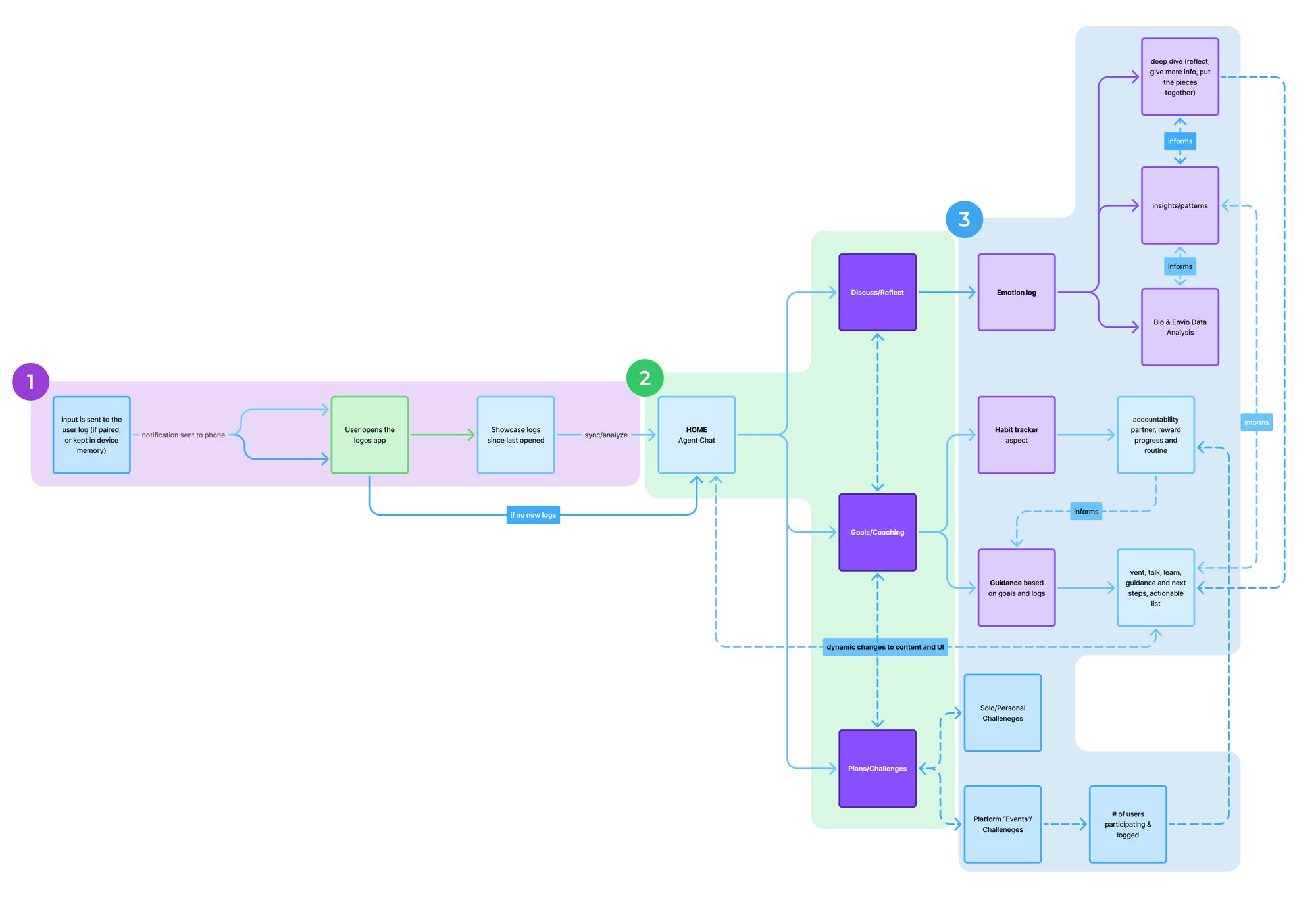
High level service map showing how the logger, app, and AI systems work together across reflection, coaching, and challenge flows.
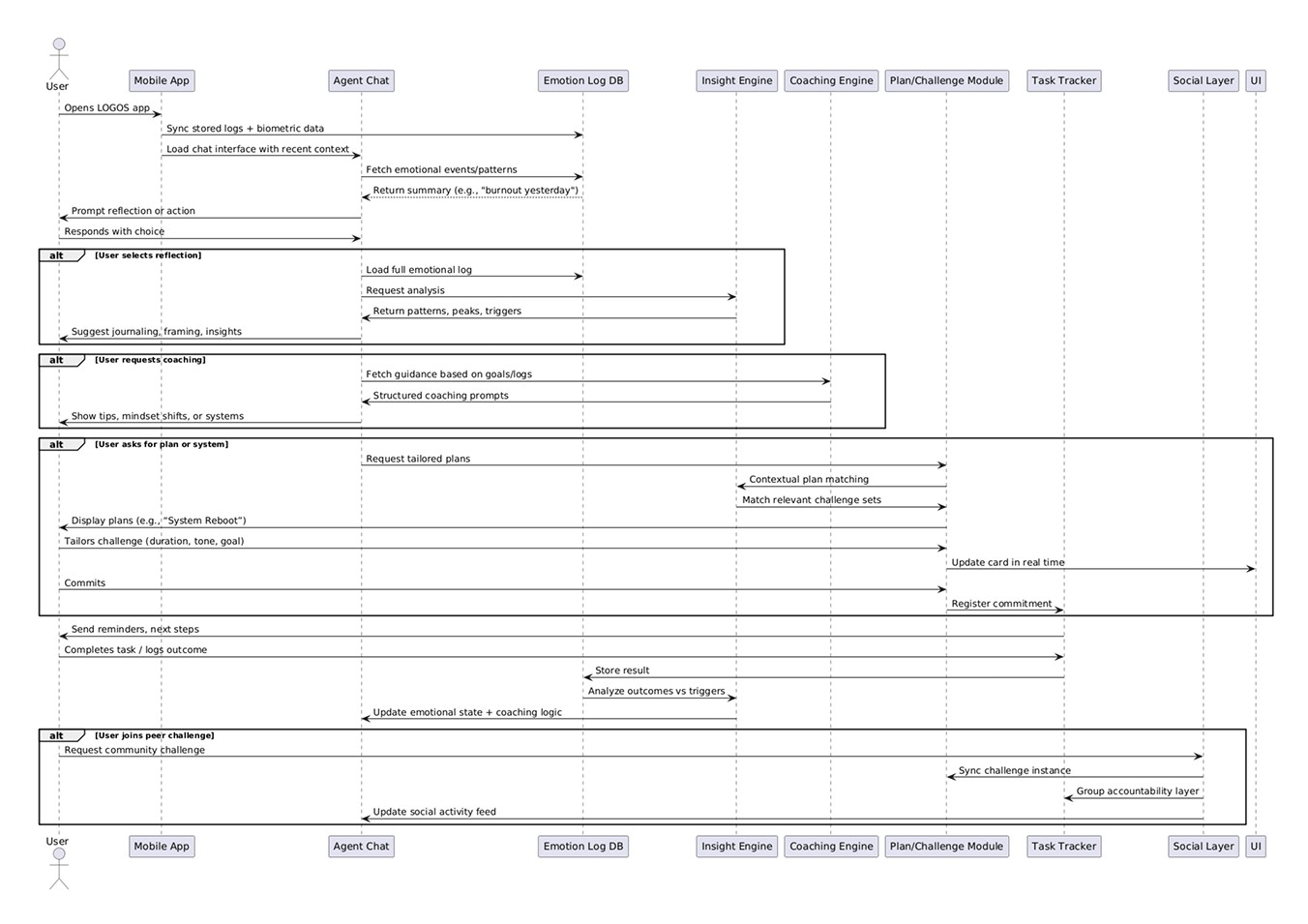
Detailed sequence diagram mapping how user actions trigger analysis, coaching logic, plans, and accountability features across the platform.
Validation
We tested early hardware directions to understand which forms and interactions felt most natural, and which ones created confusion or friction.
One useful pattern was that users interpreted the object as a technical gadget before they interpreted it as a wellness tool. That was a good sign. It meant the hardware was moving away from the emotional softness that can make this audience uncomfortable. At the same time, it showed that the product still needed clearer cues around what it does and how to use it.
The testing also showed that tactile controls created more interest than flatter or less obvious interactions. Users responded best to interactions that felt mechanical, stable, and satisfying. The more physical the interaction felt, the more intentional the logging moment became.
Some concepts still needed work. Certain forms were visually interesting but unclear in the hand. Others needed stronger feedback around input confirmation. We also had to balance intrigue with usability. The product needed to feel discreet, premium, and technically believable, but not so mysterious that users could not understand it.
Key Refinements:
We moved toward the more compelling and intuitive dial based direction.
We improved clarity around what each action does and when an input is confirmed.
We reinforced portability and quick on the go interaction.
We recognized the need to balance intrigue with immediate usability.
We validated that the object should feel discreet, premium, and technically believable.
We confirmed that strong form alone was not enough. The interaction needed to make sense quickly.
These sessions sharpened the product by showing that the hardware needed to do two things at once. It had to create curiosity, but it also had to be understandable enough to become a repeatable daily tool.
Solution
We designed LOGOS as a physical and digital self awareness system made up of two connected parts: a tactile handheld logger and an AI guided companion app.
The logger is designed for quick mood and energy capture through a discreet, satisfying physical interaction. It lets users record their state in the moment without needing to open an app, write a journal entry, or explain everything they are feeling. That lowers the barrier to self tracking and makes the check-in feel more like a small action than a heavy emotional task.
The app takes those logged moments and turns them into reflection, pattern recognition, guided plans, and accountability. Instead of asking users to deeply analyze themselves right away, LOGOS builds awareness gradually through repeated low friction touch points.
The final concept is less about tracking emotions for their own sake and more about creating a practical bridge between feeling something, recognizing it, and doing something about it.
That distinction was important. LOGOS was designed to feel like a product users could choose, not a service being imposed on them. The system uses restraint, tactical language, and physical interaction to help users build awareness without feeling like they are being forced into a therapeutic identity.
Final logger concept illustrating the refined form, interaction model, and supporting hardware components.
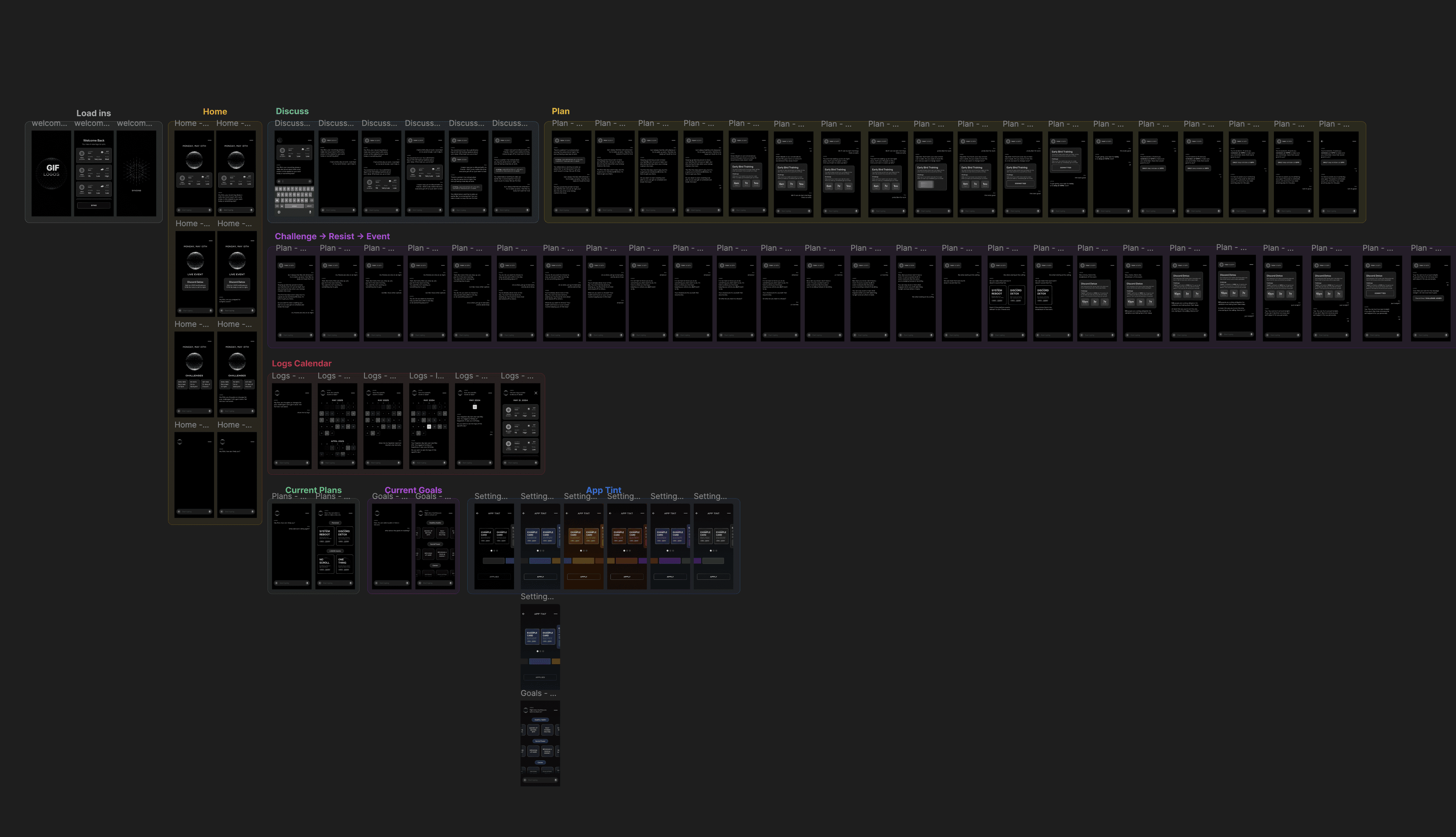
System wide high fidelity screen map showing the breadth of the app experience across onboarding, home, discussion, planning, logs, and settings.
Key Features
Tactile Mood and Energy Logging
The physical logger lowers the barrier to self tracking. Instead of relying on long journaling flows or app notifications, users can quickly record their mood, energy, and small task states through a tactile interaction. This makes the check-in feel more intentional and easier to repeat.
AI Guided Reflection
The app helps users revisit past logs, understand repeated emotional states, and identify what may be shaping their behavior. The goal is not to overanalyze every feeling, but to make patterns visible over time.
Pattern Recognition
LOGOS connects logged moments across days and weeks, helping users notice relationships between mood, habits, energy, stress, avoidance, and environment. This turns scattered emotional moments into something users can actually understand.
Action Plans
When the system identifies repeated struggles or unhelpful patterns, it can guide users into small, realistic next steps. The plans are designed to feel achievable, not overwhelming. The focus is on building momentum through practical action.
Challenge Based Accountability
Shared challenges create structure, momentum, and accountability without feeling like traditional therapy. This gives users a way to take action alongside others while still keeping the experience performance oriented.
Performance Based Framing
The system uses language around readiness, consistency, control, and optimization to make the experience more culturally acceptable for the target audience. This framing helps LOGOS reach users who might reject conventional wellness language.
Hybrid Hardware and Software System
The logger creates ritual, immediacy, and physical commitment. The app adds memory, analysis, guidance, and direction. Together, they create a more complete loop than an app only mood tracker.
AI Guided Behavior Support
The AI companion helps translate reflection into action. It can surface patterns, ask follow up questions, suggest plans, and help users stay accountable. The AI is positioned less like a therapist and more like a direct, structured coach for self awareness and behavior support.
Reflect: revisit past logs, uncover hidden patterns, and better understand what is shaping your emotional state.
Plan: LOGOS turns repeated struggles into practical plans that build momentum through small, achievable actions.
Challenge: shared challenges create structure, accountability, and a sense of collective progress.
Results
LOGOS showed that a wellness adjacent product for this audience becomes much more believable when it is framed around control, performance, and practical self awareness instead of traditional mental health language.
The strongest outcome was not only the final prototype. It was the fact that the concept became clearer and more persuasive once the framing matched the audience’s psychology. The combination of tactile input, restrained language, AI guided reflection, and practical behavior support created a stronger value proposition than a generic app first solution.
The project also became more complete as we pushed beyond screens. The final concept included a physical logger direction, a companion app experience, a service map, a sequence diagram, go to market thinking, a hybrid revenue model, and a phased rollout strategy. That made LOGOS feel less like a speculative wellness app and more like a product ecosystem that could be tested and developed further.
Main Outcomes:
A clear product concept built around self awareness, performance, and emotional regulation.
A physical logger direction that felt discreet, tactile, premium, and technically believable.
A companion app experience for reflection, pattern recognition, plans, challenges, and AI guided support.
A stronger audience frame focused on young men ages 16 to 25 who are skeptical of therapy but already engaged with performance driven spaces.
A clearer go to market path through trusted communities, creator channels, and institutional partners.
A hybrid business model combining hardware sales, subscription revenue, and partnerships.
A next step plan for MVP refinement, beta testing, retention validation, and longer term ecosystem growth.
The project also made the core risk clearer. LOGOS would not succeed simply because it has useful features. It would succeed or fail based on whether users trust the framing, return to the ritual, and feel that the system helps them understand themselves without making them feel judged.
Next Steps
If LOGOS were developed further, the next stage would be moving from concept validation into staged product development.
Phase 1: MVP Refinement
The first priority would be refining the MVP across both hardware and software. This would include tightening the core interaction model, improving input confirmation, testing the dial based hardware direction further, and simplifying the app experience around the most important first use behaviors. This phase would also need more direct testing around emotional framing. The key question would be whether users actually connect with the language around readiness, consistency, self regulation, and performance.
Phase 2: Retention and Behavior Testing
The next priority would be testing whether users return to the system over time. LOGOS depends on repeated use, so retention would be more important than first-impression appeal alone. This stage would focus on whether users sustain the logging ritual, whether they trust the app’s feedback, whether AI guided plans feel useful, and whether the product helps users build self awareness through small repeated actions.
Phase 3: Limited Hardware Batch and Closed Pilots
A limited hardware batch could be used for beta testing with high trust communities such as schools, nonprofits, mentorship programs, gyms, and esports spaces. This would help test the system in real contexts and evaluate whether the product works across different user groups. Closed pilots would also help identify the support, onboarding, privacy, and partnership requirements needed before wider rollout.
Phase 4: Broader Ecosystem
Longer term, LOGOS could expand into a broader ecosystem. Possible directions include a lighter app only version, integrations with existing health platforms, more adaptive AI guidance, stronger group accountability features, and Squad Mode for shared challenges.
At that stage, the opportunity becomes larger than a single product. LOGOS could become a platform for emotional performance, self regulation, and structured personal growth with both consumer and institutional applications.
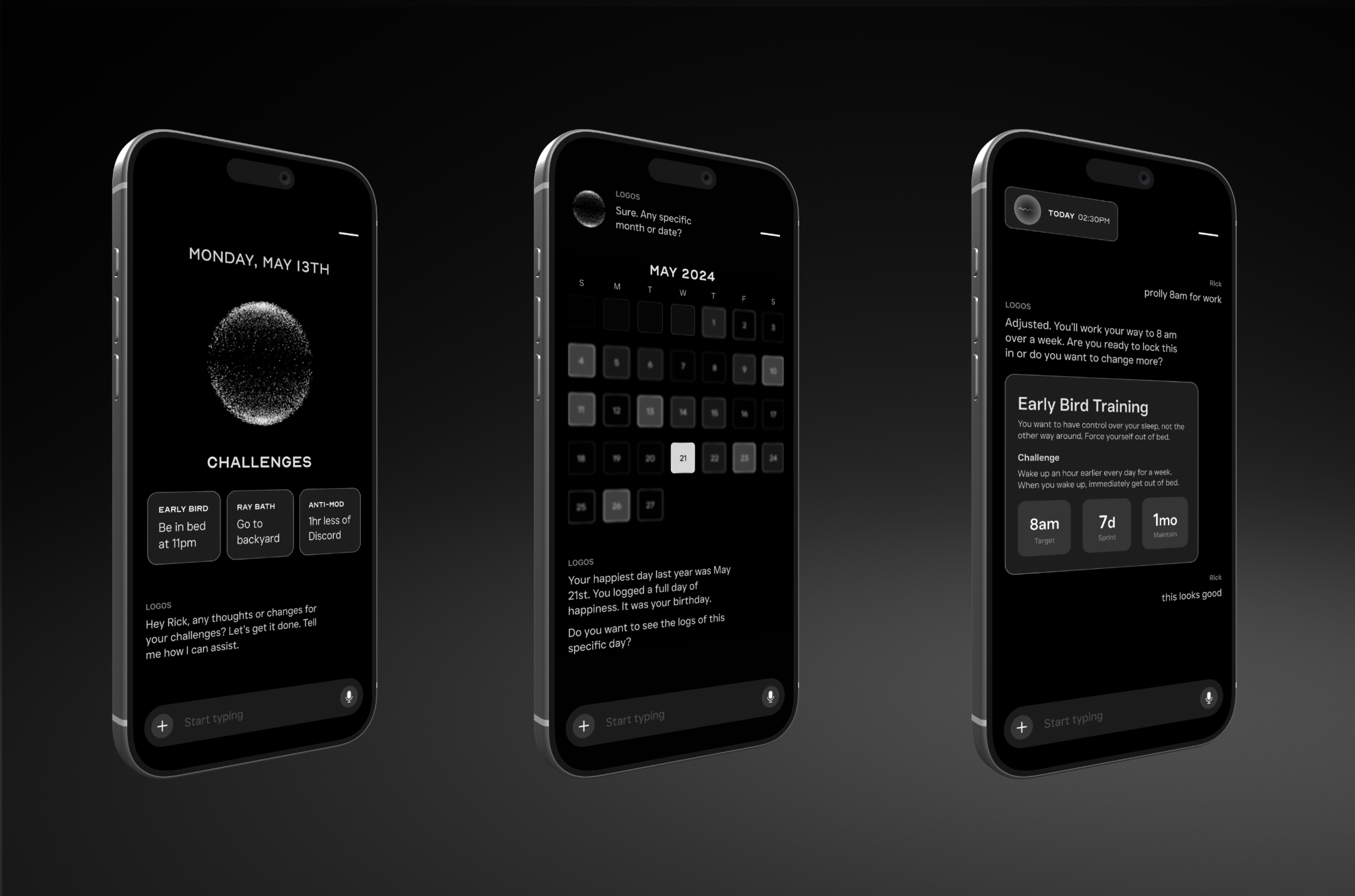
Key app interface moments demonstrating how LOGOS delivers challenges, calendar based reflection, and structured habit plans.
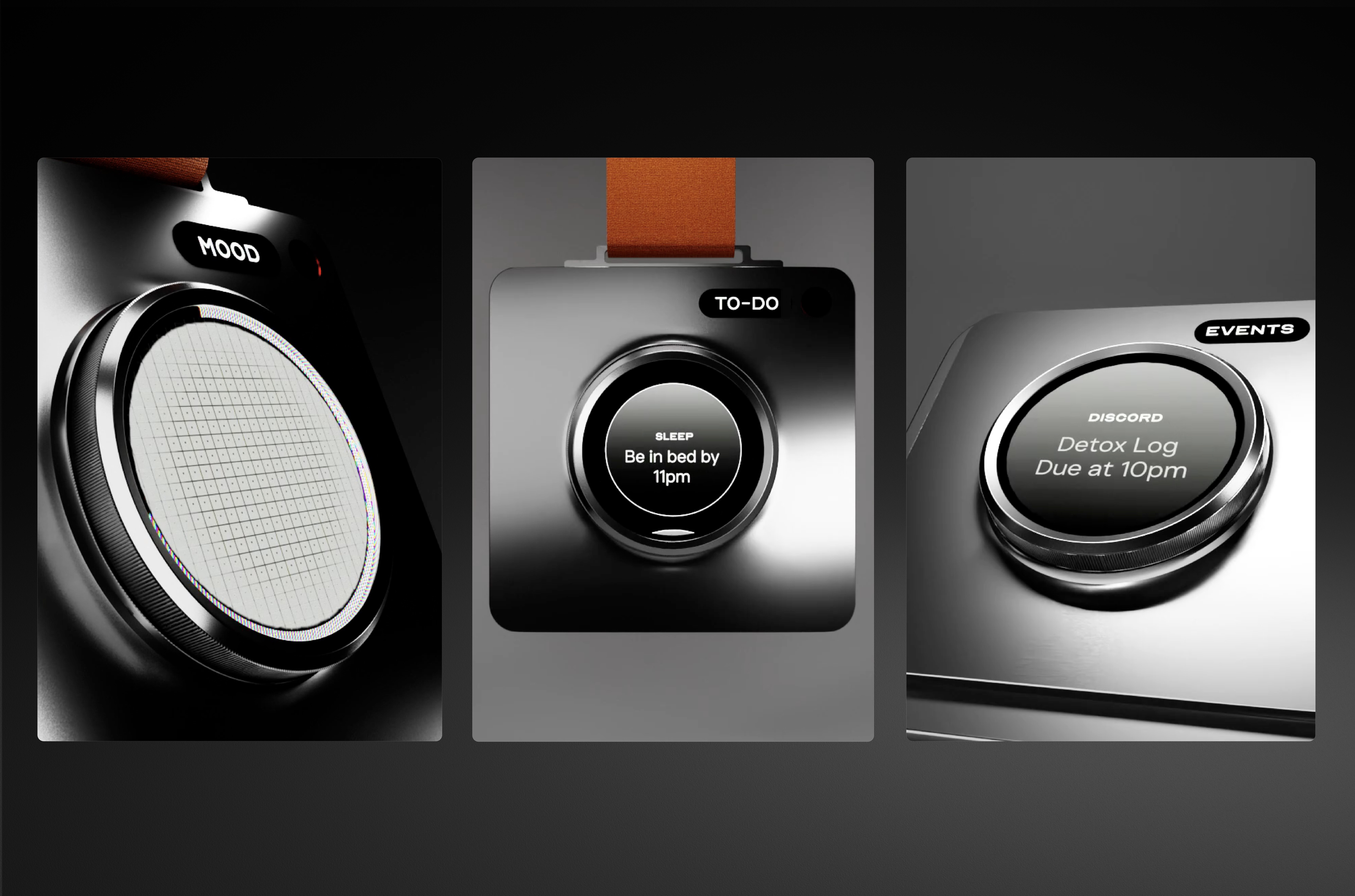
Key logger interface moments demonstrating mood logging, to do list popups, and notification popups.
Impact
LOGOS changed the framing of the problem from “how do we get young men to use wellness tools?” to “how do we create a system that feels credible enough for them to choose in the first place?”
That shift made the concept stronger. Instead of designing for an ideal user who is already open, emotionally fluent, and ready to reflect, we designed around resistance, identity, stigma, and the cultural patterns shaping actual behavior.
The project also showed how UX can operate beyond screens. Product language, physical interaction, emotional framing, AI behavior, launch strategy, pricing, and partnerships all affected whether the concept felt viable.
At a broader level, LOGOS explored how design can offer a healthier alternative to the systems young men may already turn to for structure, certainty, and identity. It does not try to solve the entire mental health crisis. It focuses on an earlier and more realistic entry point: helping users notice patterns, build self awareness, and take small actions before they spiral further.
For me, the impact of the project was also personal as a designer. It pushed me to think about how products earn trust with difficult audiences, especially when the problem is not just usability but identity, resistance, and cultural fit.
LOGOS app and physical wellness logger.
What I Learned
This project taught me that product resonance can matter just as much as usability. A system can work correctly and still fail if the framing does not align with how users see themselves.
One of the biggest lessons was the importance of designing the entry point, not just the feature set. In this case, the hardest problem was not mood logging, AI guidance, or reflection. The harder problem was creating a form, tone, and product logic that the audience would not immediately reject.
I also learned how much stronger a concept becomes when it is pushed beyond interface design. The product became more believable when we thought through positioning, adoption, pricing, launch channels, partnerships, hardware value, and long term growth.
Another important lesson was that physical interaction can change the emotional meaning of a product. Logging through a dedicated object made the experience feel more intentional and less like another app asking for attention. That helped the concept feel more distinct and more aligned with the target user.
Most importantly, LOGOS taught me that designing for sensitive behavior requires restraint. The product cannot overpromise. It cannot talk down to the user. It has to respect resistance while still creating a path toward better awareness and action.
Reflection
LOGOS is one of the projects that most clearly reflects how I like to work as a designer. It sits at the intersection of user behavior, product strategy, concept development, systems thinking, and business viability.
What made the project meaningful was that it dealt with a difficult and culturally messy problem without flattening it into a simple app solution. The audience was not easy to design for, and that was the point. The product had to work around resistance, stigma, identity, and the fact that harmful online spaces often feel more compelling than helpful ones.
My strongest contribution was helping shape the strategy around the concept. I helped define the audience, sharpen the framing, connect the hardware and app into one system, and think through how LOGOS could be positioned, launched, priced, and scaled. That work helped move the project from an interesting idea into a more complete product direction.
I am especially proud that LOGOS did not rely only on good intentions. We treated adoption as a design problem. We asked what the audience would actually trust, what they would reject, what rituals could fit into their life, and what kind of language would make support feel usable instead of embarrassing.
If I were continuing the project, I would want to test it more deeply with the target audience over time. The next questions would be about retention, trust, privacy, long term behavior change, and whether the physical ritual actually helps users build self awareness in daily life.
Overall, LOGOS reinforced one of the biggest things I care about in product design: the best solution is not always the one that looks the most caring from the outside. Sometimes the stronger design is the one that understands the user’s resistance and still creates a way in.